Indigenous Diggers
Section 8: United Nations Peacekeeping Roles
Australian defence forces have been involved in peacekeeping around the world. The United Nations provides defence forces to keep the peace in many parts of the world. These forces protect local people and keep the warring groups separated. Their job is to keep the peace and work to get the country back to a peaceful existence.
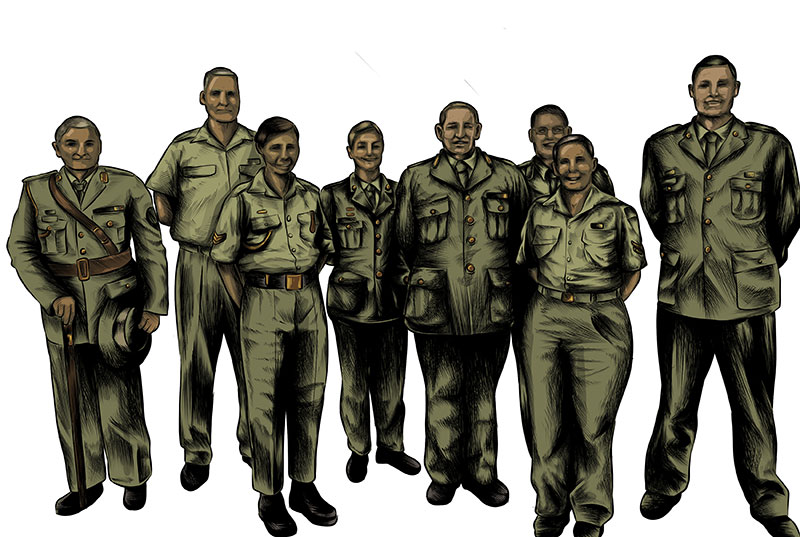
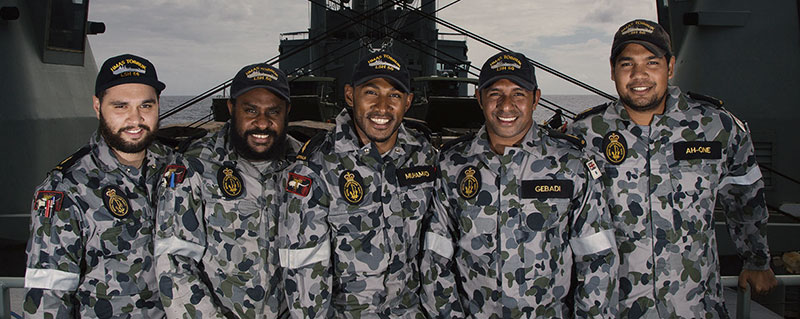
Aboriginal service men and women have been welcomed into Australia’s Defence Forces. They are strong and athletic, brave and hard-working. Wherever they go they are highly respected as good soldiers and team players. In some ways, the traditional warrior culture of Australian Indigenous peoples is of working together as a team, bravery being honoured and athletic skills being essential. All the needs of a good soldier!
Australian Defence Forces as United Nations peacekeepers have been spread around the world since 1947. The major role is to keep the enemies separated and hope a peaceful way of solving the problems can be sorted out before armed fighting starts again. Australia has served in Asia, Middle East, Africa, Cyprus and many other parts of the world.
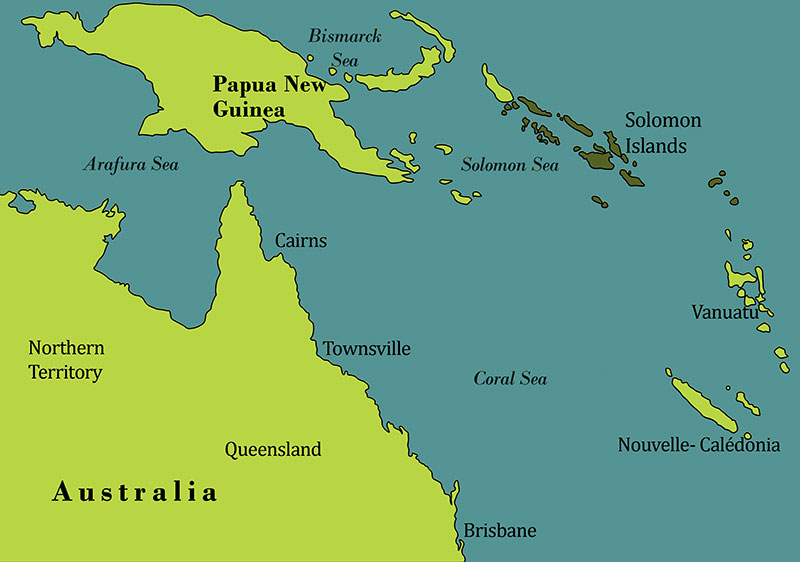
Australian Forces as United Nations Peacekeepers
When? 1947–Today.
Why? Australia has had peacekeepers in the field with the United Nations continuously for over 50 years.
Indonesia
After World War 2 Indonesia was granted partial independence from the Netherlands. The United Nations involvement was to keep the fighting groups apart and report any breaks in the peace. In Indonesia in 1947, Australians were part of the very first group of UN military observers anywhere in the world, and were, in fact, the first into the field. Australian Military Observers involvement in the early years was to see who was breaking the peace and force them to stop. Australia’s peacekeepers were generally unarmed military observers, promoting peace indirectly by ensuring that neither side in a conflict could violate a ceasefire or commit atrocities without the United Nations and the world community knowing about it. Observer missions help create stability, but do not necessarily help end the conflicts which they are observing.
Larger Operations
Since the 1970s, Australia’s contributions to peacekeeping operations have increased in size and scope, with service in the Sinai, Zimbabwe and Namibia. Peacekeeping in the 1990s For a period in 1993 Australia had over 2000 peacekeepers in the field, with contingents in Cambodia, Somalia, Rwanda, the Middle East, Cyprus, Iraq and Bougainville. Six multinational operations have been commanded by Australians.
East Timor
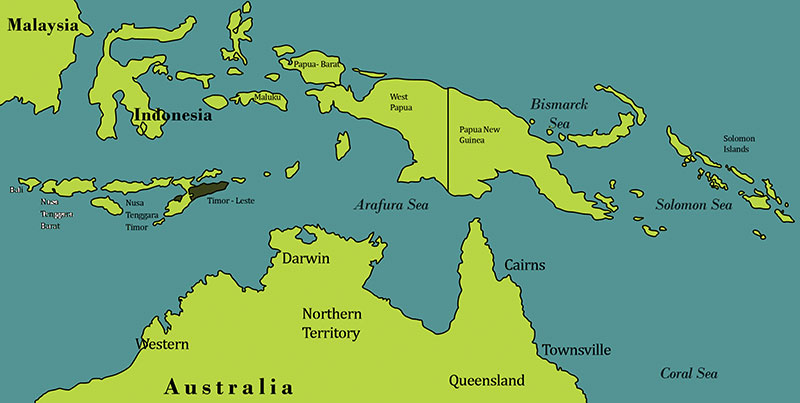
East Timor’s climate is influenced by Northern Australia. It has a similar look and feel to the Northern Territory. It has hot dry winds from Australia causing a dry season and then a period of torrential rain called the wet season.
East Timor is part of the Indonesian chain of islands running from Malaya to Papua New Guinea. It was a colony of Portugal 100 years before Australia was colonized. The Portuguese were after the sandalwood. When the sandalwood was exhausted the Portuguese grew sugar cane, coffee and cotton. East Timor was given independence in 1975 after armed resistance and popular unrest from local independence fighters called Fretilin. Indonesia immediately invaded and took control. Australia, the USA and others did not resist the takeover by Indonesia. Fretilin fighters were considered pro-communist and a possible danger to the whole area if they sided with Russia or China. There was some fear of a ‘Cuba on our Doorstep’. East Timor then had a bloody civil war against the Indonesian forces for 25 years.
The people of East Timor are descended from the Australoid and Melanesian groups to the East such as New Guinea and the Solomons Islands. There were other waves of people from areas of Malaysia and China. The people have been there as long as the First Australians. Over 400 years of Portuguese culture and language influence means the culture, language and people are different to the Indonesians. East Timorese always saw Indonesia as their neighbours not their brothers. They never wanted to be part of Indonesia and were prepared to fight for their freedom.
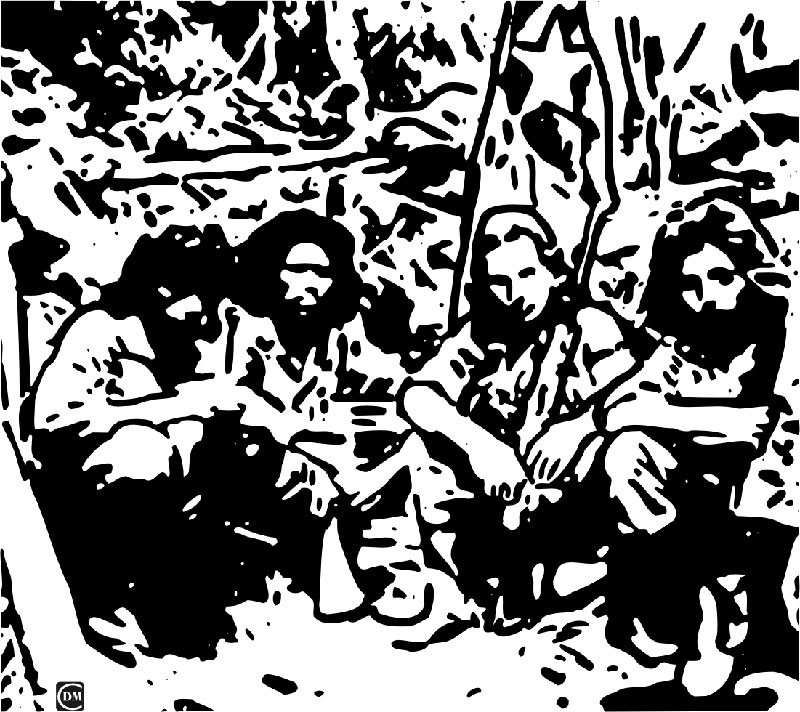
East Timor is a poor country with very few roads outside of the capital Dili. It is a small island but most of the country is difficult to access due to lack of roads. This allowed the freedom fighters known as Fretilin to have a continuous guerilla campaign against the Indonesian military. They could hit and run back into the forests. Indonesia was never able to stamp out the armed resistance movement. The death toll from the Indonesian army was enormous with 200,000 East Timorese killed. A third of East Timor’s population died in this period – most being village people.
After 25 years of Fighting – A Vote for Independence
The President of Indonesia Habibie agreed to a vote for independence or remain as part of Indonesia. This vote took place under the control of the UN in 1999.
As soon as the results were announced violence erupted. The capital of East Timor, Dili was burnt by Indonesian-backed armed gangs. Killings of civilians was happening continually and there was widespread panic by the people. Indonesia did not want to lose East Timor! It was pride and politically dangerous for any Indonesian President to let this happen but there was pressure internationally for East Timor to be given a chance to decide its own future.
The first President of East Timor was a captured Fretilin leader called Xanana Gusmao. He has helped to give a clear and continuous voice to East Timor internationally. He was president from 2002 to 2007.
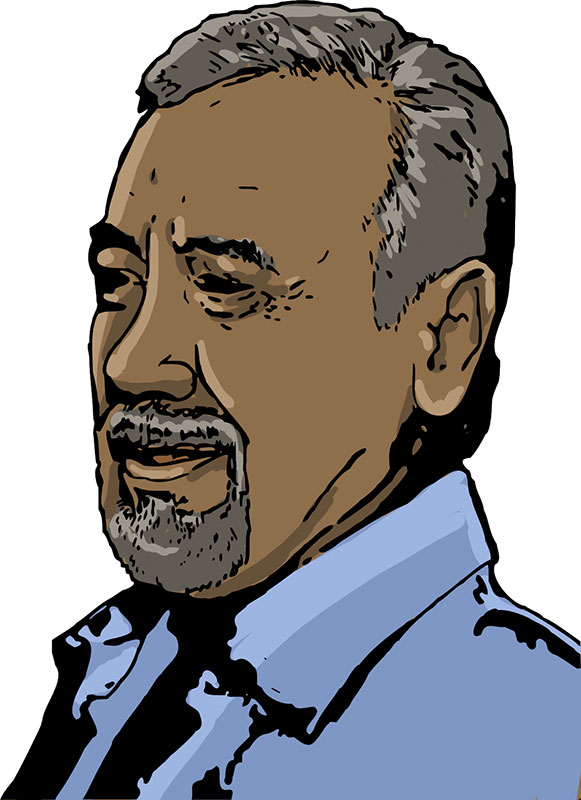
On 19 October 1999, Indonesia formally recognised the result of the referendum. Indonesia backed off and reduced support to the militias operating in East Timor. The peace was restored by the UN backed soldiers. A large proportion of these soldiers were Australians. Ten Australians have died during their peacekeeping active service in East Timor. All deaths were not related to death from fighting militias.
Indigenous soldiers once again played a significant role in the peacekeeping role in East Timor. Corporal Rick Morris, Royal Australian Engineers served in East Timor alongside other Australian aboriginal soldiers. Corporal Rick Morris has a family tradition of military service. Morris’ grandfather Frederick Lovett served in World War 1 in the 4th Light Horse Regiment. The Lovetts’ family had served in every war. In honour of this family, the Veteran Affairs’ building in Canberra has been named the Lovett Tower.
Afghanistan
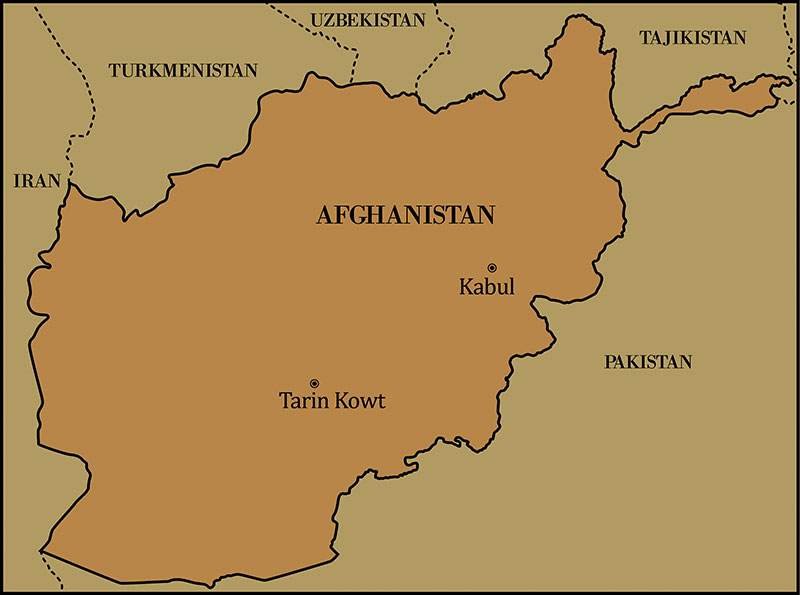
Indigenous soldiers served in Afghanistan as part of the Australian forces sent there as part of the UN mission. Some were identified as Indigenous and others did not get identified.
Operation Slipper was the name given to Australia’s contribution to the war in Afghanistan. The involvement started at the end of 2001 and concluded on 31 December 2014. There has been a series of defence groups used – army, air force and navy. The army was directly engaged in battles with Taliban and other anti-government groups. The air force and the navy had support roles to this operation. Afghanistan has not been easy for the defence forces and the soldiers. Over 41 soldiers were killed, 261 seriously wounded.
The role of the Army was several:
Helping local soldiers take over the role of combat soldiers to defend their own country.
Surveillance and intelligence gathering to direct where the government troops would be safe and also effective.
Special Operations – these are the SAS soldiers who would conduct patrols and target specific groups and people for attack.
Co-ordination across all the UN groups in Afghanistan so accidents do not happen.
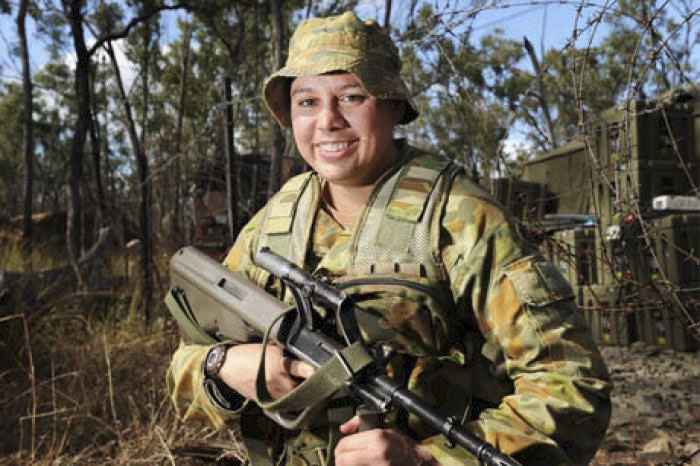
Australian Indigenous soldiers were represented in all of the services – navy, army and air force. Private Andrew Roberts served in Afghanistan in Tarin Kot. Roberts comes from a long family history of army service. His grandfather Trooper William Chatfield served with the Light Horse Regiment in World War 1.
Captain Chloe Dray’s ancestors are from Western Queensland. She is the third generation with army service. She was deployed to Afghanistan – Uruzgan Province. Her grandfather joined the Army in 1941. Arthur Dray took part in an important battle in 1945 called the Battle of Tarakan. Chloe’s father Bill Dray served 13 years in the RAAF and continues involvement with the Air Cadets in North Queensland.
“At my unit, it doesn’t matter if you’re black or if you’re white, because when you put on this uniform, we’re all wearing the green skin and we’re all treated the same. To me as an indigenous soldier it means I have a connection with the land.” she said.
“The best thing about the ADF is our involvement in the border protection of our country and protecting that land.” she said.
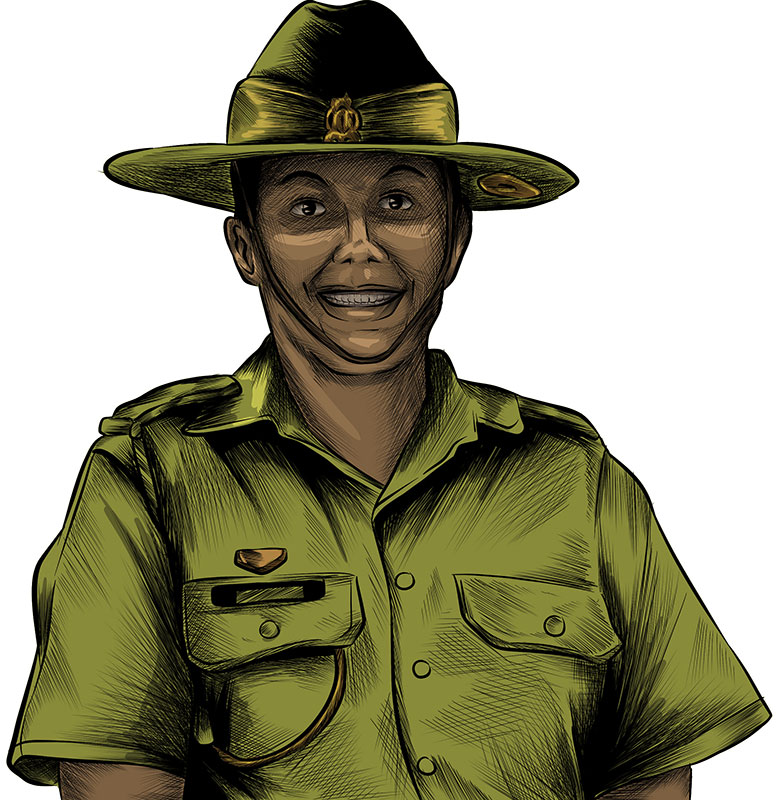
Indigenous service men and women are well integrated into Australia’s defence forces. Ancestral warriors of Australia’s Indigenous soldiers may be looking with pride at their people.
Activities
Assessment
Download the assessment for this section.
Online assessment will be added in a future version.
Progress
Section not yet completed.