Indigenous Diggers
Section 7: Persian Gulf
When? 1990–1991.
Why? Iraq invaded its neighbour, Kuwait, on 2 August 1990.
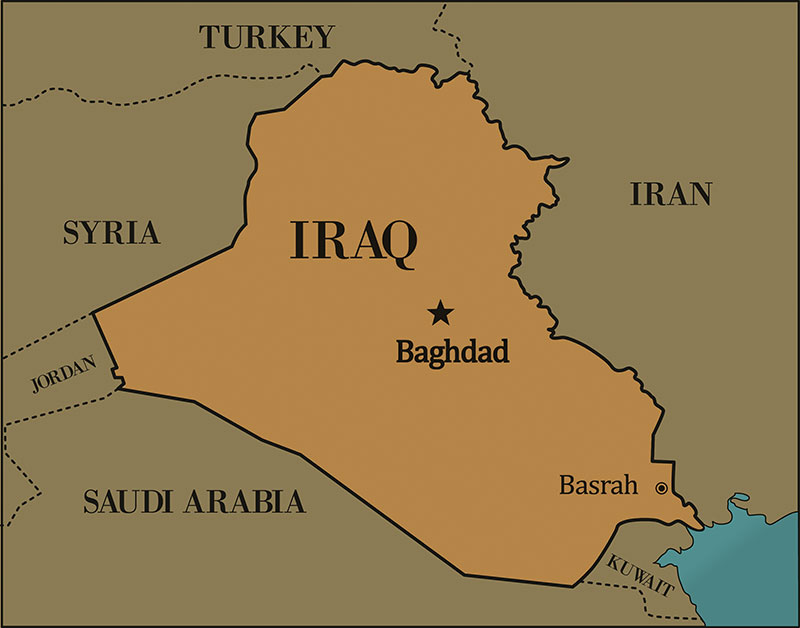
The invasion was widely criticized by countries. Four days later the United Nations Security Council all agreed that on a trade embargo against Iraq. A blockade of Iraq’s access to the sea followed within weeks. In November 1990 the UN Security Council set 15 January 1991 as the deadline for an Iraqi withdrawal from Kuwait. On 17 January coalition forces began an aerial bombardment of Iraq that continued without stopping until the war ended 43 days later. On 24 February 1991, after more than a month of aerial attacks, the coalition’s ground forces moved against Iraqi positions in Kuwait and in Iraq itself. After two days of strikes Baghdad radio announced that Iraq’s armed forces had been ordered to withdraw from Kuwait to the positions they had occupied before August 1990. Two days after this order, the coalition ceased hostilities and declared victory. Coalition losses amounted to 166, many by ‘friendly fire’; at least 100 000 Iraqis had been killed. Australian forces were deployed in the Gulf War under the auspices of the UN. The Royal Australian Navy involvement (RAN) provided vessels for the multi-national naval force, which formed an interception force in the Persian Gulf to enforce the UN sanctions. The RAN presence included HMA Ships Success, Westralia, Sydney (IV), Adelaide, Brisbane and Darwin. A RAN clearance diving team was also dispatched for explosive ordnance and demolition tasks. In addition to naval units, Australian personnel took part on attachment to various British and American ground formations. A small group of RAAF photo-interpreters was based in Saudi Arabia, together with a detachment from the Defence Intelligence Organisation.
Four medical teams were also dispatched at the request of the US. Although the ships and their crews were in danger from mines and possible air attack, Australia’s war was relatively uneventful, and there were no casualties. At the war’s end 75 Australian personnel were sent to northern Iraq to assist the delivery of humanitarian aid to Kurds living in the UN-declared exclusion zone, while ships of the RAN remained on station, at US request, to maintain trade sanctions.
There were no Australian casualties.
Indigenous soldiers served in all areas of armed forces in Iraq. The actual numbers are not known but by this stage, Aboriginal and Torres Strait Islanders have become a welcomed and important part of Australia’s defence capability.
Assessment
Download the assessment for this section.
Online assessment will be added in a future version.
Progress
Section not yet completed.