Indigenous Diggers
Section 6: Vietnam War
When? 1962–1973.
Why? Vietnam, a French colony until World War II when the Japanese invaded, had been divided into North and South in 1954. Just like Korea and now in a fight over control of the whole country. World War 2 had not ended in many parts of the world. The misery continued onwards!
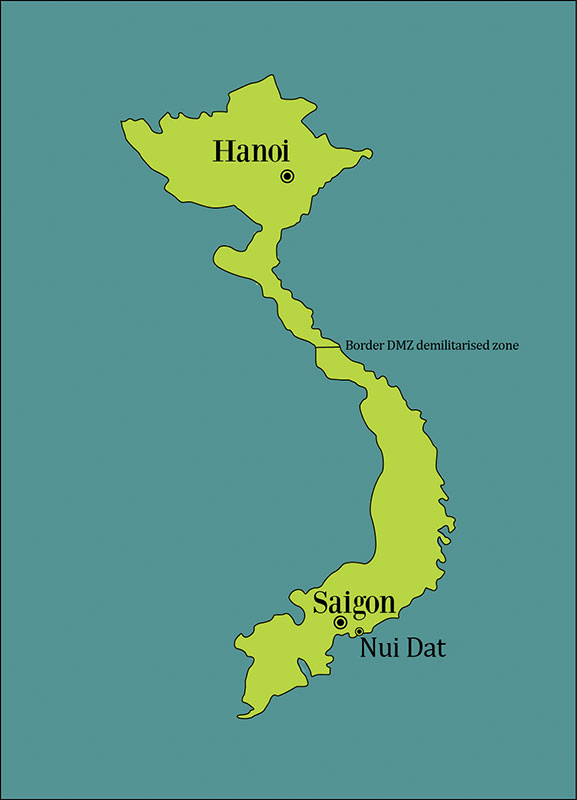
Why Vietnam? A French colony until World War II when the Japanese invaded, had been divided into North and South in 1954. France had fought the Vietnamese who had been on their side against the Japanese in the Second World War. France did not want to give up its colony of Vietnam. The French were defeated by the Communist government of the North led by Ho Chi Minh. The government of the North was supported by Russia, that of the South by the United States. Each wanted unification of the country, but under its own government and system.
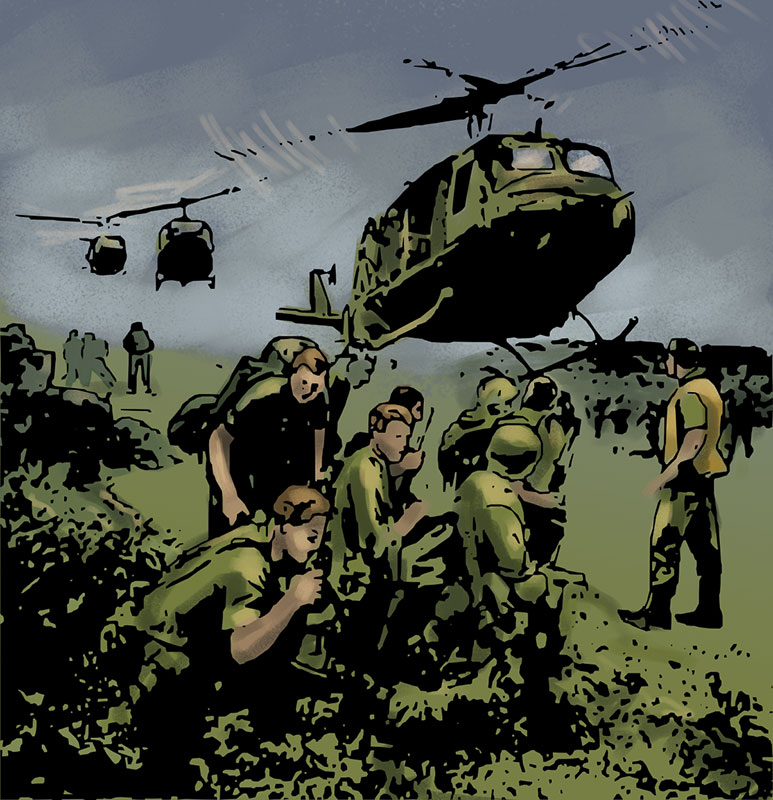
There were supporters of both sides in the war. North Vietnam continued to attack the South who needed help from other countries including USA, Australia, New Zealand and others such as Korea. The South was unable to defeat these forces without help. The United States supported the South as part of the Cold War—seeking to limit and defeat the spread of communist power. Australia similarly supported the defeat of communism, as it feared it would gradually spread through Asia and isolate and threaten Australia itself.
USA as a Friend and Ally
Supporting the United States in the Vietnam War, Australia was also demonstrating its value as a friend and ally—with the expectation that it could in turn call on United States for help if the need ever arose. By 1968 US military planners began to question whether a decisive victory could ever be achieved. The offensive had stimulated the US public’s growing opposition to the war. The US government began to implement a policy of ‘Vietnamisation’, the term coined for a gradual withdrawal of US forces that would leave the war in the hands of the South Vietnamese. The reason why the USA was involved was due to the failure of the South Vietnamese government and to leave meant it will be weaker than before. It meant the South was doomed to be quickly overrun by the North Vietnamese.
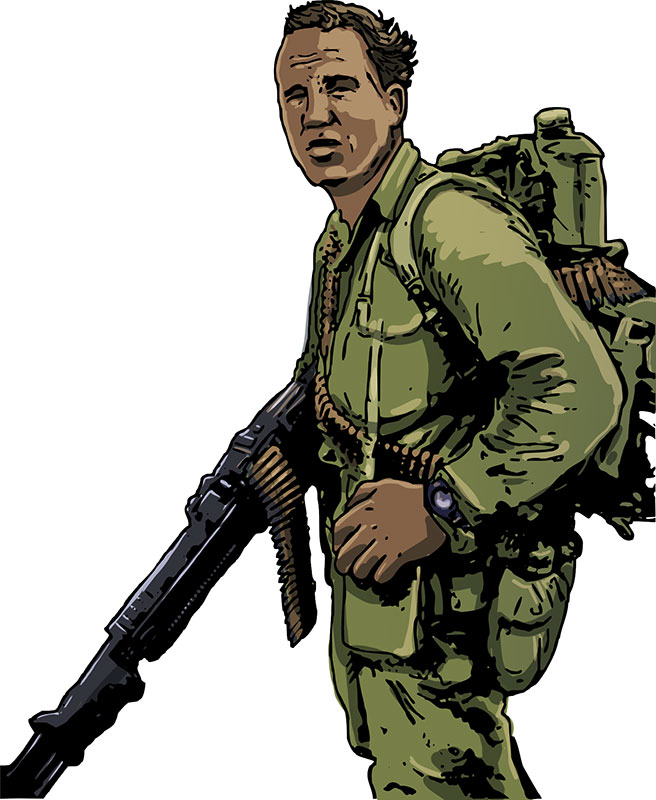
Australia initially provided 30 military advisers, dispatched as the Australian Army Training Team Vietnam involvement (AATTV). Their arrival in South Vietnam during July and August 1962 was the beginning of Australia’s involvement in the war in Vietnam. The Australian government then sent an infantry battalion in June 1965 to serve alongside the US 173rd Airborne Brigade in Bien Hoa province and then increased the participation to two battalions and support services, to be based at Nui Dat, Phuoc Tuy province. This taskforce included conscripts who had been called up under the National Service Scheme, introduced in 1964. Indigenous men were exempt from this act of 1964 but many joined regardless. Over 300 Indigenous soldiers served in Vietnam and more than 7 were killed in battles.
At the height of Australian involvement the taskforce numbered some 8500 troops. In August 1966, a company of 6RAR was engaged in one of Australia’s heaviest actions of the war near Long Tan. After a night of fierce fighting, during which it seemed that the Australian forces would be overrun by the enemy’s greater numbers, the Viet Cong withdrew, leaving behind 245 dead and carrying away many more dead and wounded. Eighteen Australians had been killed and 24 were wounded, but the battle eliminated communist dominance over the province. Of those that fought two of these were Indigenous soldiers. By late 1970 Australia had begun to wind down its military effort in Vietnam. The withdrawal of troops continued throughout 1971: the last battalion left Nui Dat on 7 November, while the last troops, the embassy guards and some combat advisers belonging to AATTV, had all returned by June 1973. Statistics From the time of the arrival of the first members of the AATTV in 1962 some 50 000 Australians, including ground troops and Air Force and Navy personnel, served in Vietnam; 520 died as a result of the war, and almost 2400 were wounded.
Vietnam the First Television War!
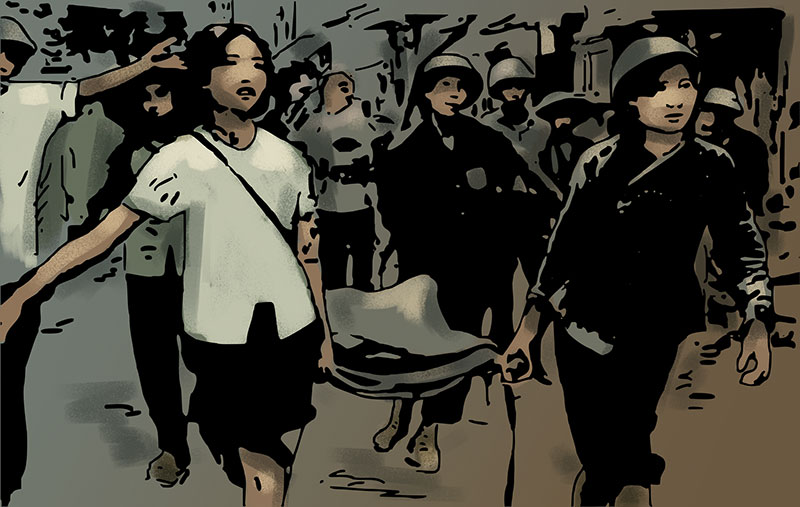
Countries saw the suffering of the Vietnamese people. The bombing of Hanoi turned many people away from this war. It seemed a cruel and pointless war. No-one wanted to keep it going – it had to finish!
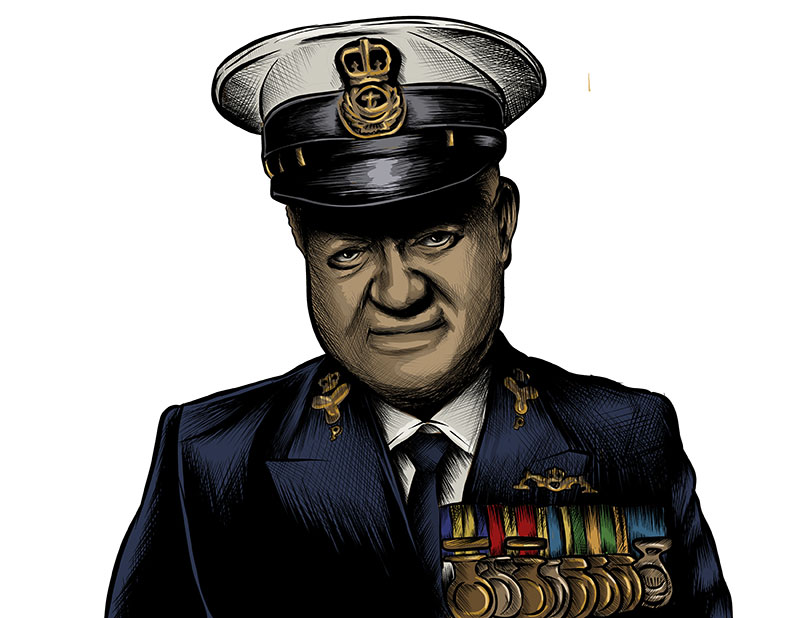
Indigenous servicemen also served in Navy. “When you’re serving, things are pretty equal. You do your job well, your mates respect you and you get promoted. It’s when you get back that it gets hard on the black Digger.” – Chief Petty Officer David Williams, President NSW Aboriginal and Torres Strait Islander Veterans Association. David was a veteran of 29 years’ service including Vietnam.
Activities
Assessment
Download the assessment for this section.
Online assessment will be added in a future version.
Progress
Section not yet completed.