Indigenous Diggers
Section 3: World War 2
World War 2 was not just in Europe – it was worldwide! The war went across Europe, North Africa, Asia and the Pacific, as well as large parts of the Middle East. It was a huge and devastating tragedy that destroyed nations and peoples. Australia suffered greatly in the loss of its young men and women. Other nations did not recover for a long time! There were parts of the Soviet Union where there were no young men returning home after the war in 1945. They had all been killed or died, in the war with Germany! Parts of Siberia had no old men as a result of World War 2. Losses were staggering to consider – over 9 million plus Soviet soldiers killed, missing or dead from the war. (no-one is certain of the true number). The estimate of those people who died in Russia due to World War 2 to be over 14% of the population.
When war was declared in 1939 by Britain against Germany – Australia declared war on Germany too! Aboriginal men were divided over joining the defence forces. Some saw it as their first ever pay envelope and the chance to be treated equally. Some did not see the purpose as life had not improved for Aboriginal people after World War 1. Others thought it would help improve their conditions! And others wanted to stop a possible invasion of Australia by the Japanese. There was not a single reason for all 5,000 plus Aboriginals who joined.
Over a million Australians fought in World War 2. There were over 39,000 deaths from battle, prisoner of war, disease and accidents. Aboriginals joined the Army, the Navy and the Air Force. The actual numbers killed is not clear but was substantial.
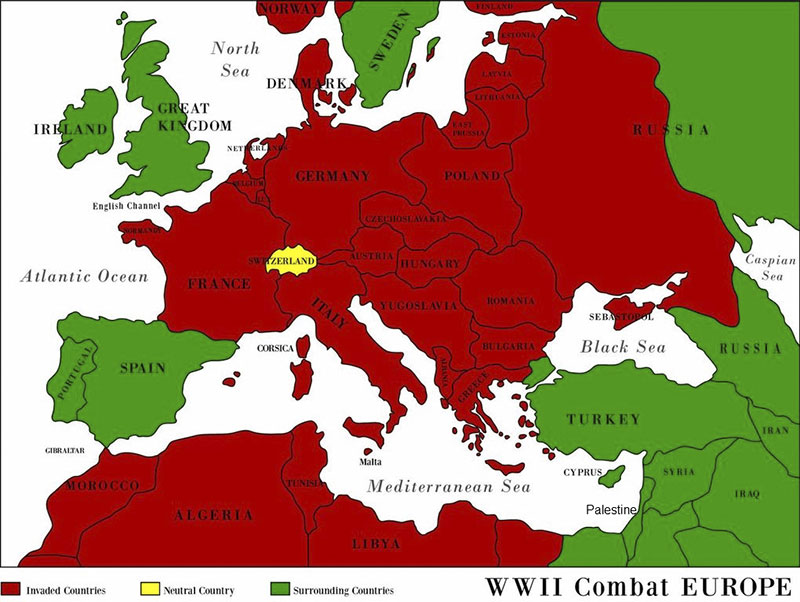
Germany
Germany was defeated in World War 1 and as part of the surrender had penalties. These penalties meant loss of land and large repayments. This was partly to blame for the next war as the people blamed these conditions on Germany suffering. Germany was impoverished from a long period of economic problems. People lost their savings in hyperinflation (money loses value as prices skyrocket) of money and many more lost their jobs. The country was in a bad state with many people angry and looking for a solution. Hitler’s NAZI Party offered the excuses and the solution. Everyone else was to blame and Germany would feel great again if they made Hitler the leader. The country would prosper and it did by using loads of borrowed money! Little did the Germans realize that the spending on a war economy would make things worse in the long run – it was only a quick fix! Germany today is a peaceful and prosperous country still living with the dark shadow of this horrible time in its history.
Hitler immediately upon taking power started to take back its lost territories with France and then Poland. The attack on Poland meant that Britain was now at war with Germany and hence, through our colonial and friendship ties with Britain – Australia was also going to be in the war. Germany took over large sections of Europe and started bombing Britain. Britain was to be invaded by Germany.
Germany was successful and fast in its victories in 1940. This speed was going to be repeated on Russia. Or so Germany thought and this was their big mistake which caused their final defeat! In June 1941, it invaded Russia and quickly got within the sight of Moscow itself before it halted. This was enough time for Russia to regroup and begin attacking. A frozen winter and a regrouped Russian army meant the war was only just beginning for Germany!
Russia threw everything at stopping Germany. It used whatever methods it could to stop German advance. In this figure trained dogs with explosives strapped to them are running at the tanks.
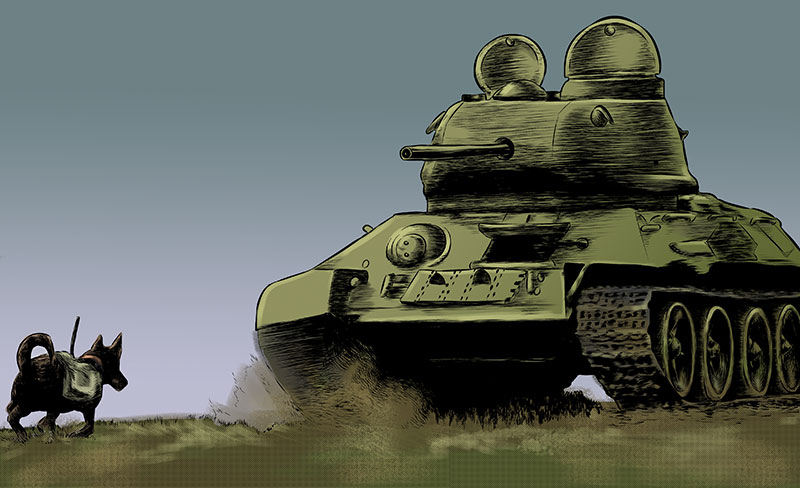
The war in Europe ended in May 1945 with the crushing of the German army by the Soviet forces in the East and the combined forces of Britain and the USA fighting from the West. German cities had been smashed and the country was in ruins.
In the Pacific the Japanese fought on to a final surrender in September 1945. Soviet forces overran Manchuria and were ready to start a land invasion of Japan. The USA had just dropped the second atomic bomb. Japan had to decide to who they were going to surrender.
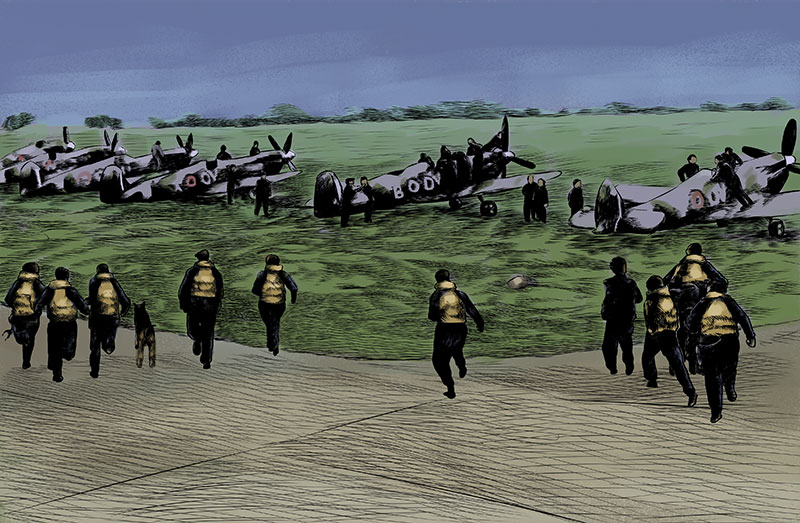
Britain faced the German Air Force and likely invasion The Battle of Britain was the last attempt to stop Britain losing to Germany.
Australia’s involvement was in the two areas of the war. For the first part it fought against the German armies in North Africa, the Middle East and parts of Europe. After 1941, the war was now in Asia and the Pacific against the Japanese. Australians moved from this war to fighting Japan very close to Australia. In fact, Australia was bombed by the Japanese across the Northern areas Darwin, Torres Strait, and Townsville and also attacked as far south as Sydney Harbour by a midget submarine launched from a mother ship off the coast of Sydney.
Australian army, navy and air force men and women were in most parts of the wars against Japan and Germany. Aboriginal men and women were in all services – army, navy and air force.
Australian fighter and bomber pilots flew in the Battle of Britain in August to September 1940. Australian pilots continued to be actively involved throughout the whole war in Europe.
The Australian Navy was involved in operations against Italy in the Mediterranean and North Africa in 1941. The initial success against Italian forces changed when there were defeats against Germany in North Africa, Greece and Crete. In June and July of 1941 Australians defeated the Vichy (pro German) French forces in Syria. This was also followed by the Australians holding out for 2 months against the German in Tobruk, Libya. The 6th and 7th Divisions went back to Australia to enter the war with Japan. The 9th Division stayed and played an important part in the Battle at Alamein, Egypt. This was an important victory as it was the first major land battle defeat for Germany. The 9th Division then left for Australia to join the rest of the army fighting the Japanese in the Pacific.
Japan: the Pacific War
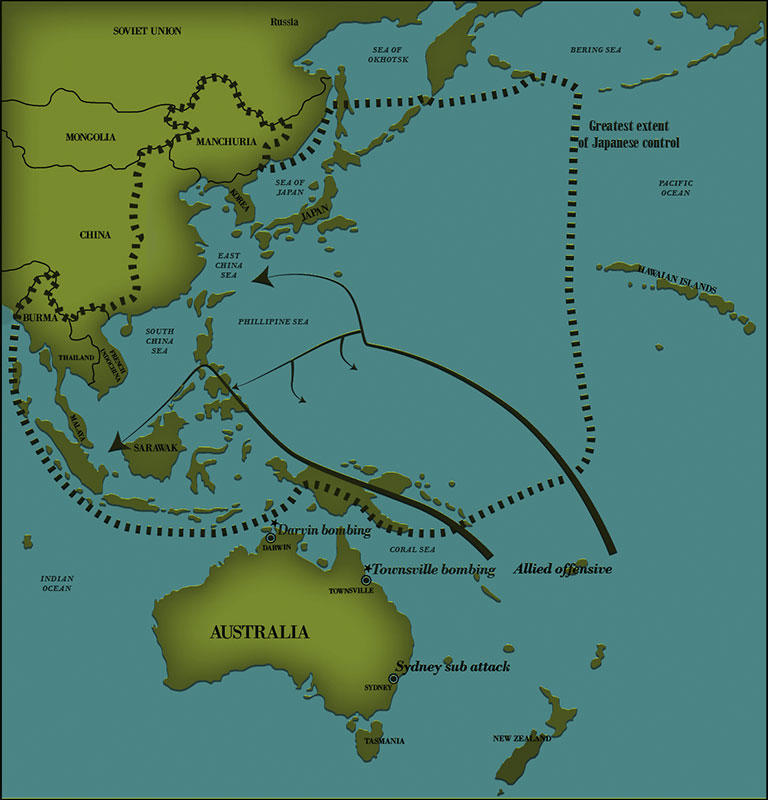
Japan also had a military controlled government. The Japanese military with the Emperor’s approval had an aim of a huge empire across Asia including China, Malaya, Vietnam, the Philippines, Burma, Thailand and Indonesia. This area went all the way to Australia in the South. The Japanese would control all of the Western Pacific Ocean. A vast area of territory! They made one big mistake! The Japanese to stop the possible American (USA) influence in the Western Pacific bombed Pearl Harbour in December 1941. This crippled United States’ Pacific Fleet but now brought the most powerful country into war with Japan. It was only a matter of time before the Japanese plan was doomed!
The war with Germany gave Japan time to take over a lot of Asia. There was weak resistance and also no large armies to stop their invasions.
Australia was now in direct danger as Japan bombed Darwin and overtook New Guinea. It was only a matter of time before Australia would be invaded.
The threat of invasion was real and the answer was to slow the Japanese advance. This was done by Australia directly attacking the Japanese in New Guinea and the USA cutting off their supply lines in the Pacific. A series of sea and land battles meant the Japanese had to use their power now to hold their positions.
Australia attacked in New Guinea. This was done by fierce fighting at places like Milne Bay and Kokoda. Names that are commonly known due to the scale of the battle. The battle plan to pin the Japanese down and stop their advance which meant that their supply ships were in danger.
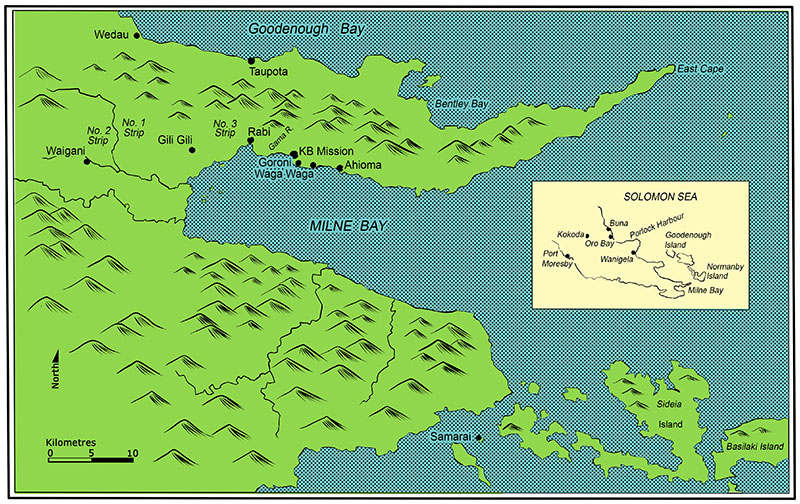
The battles in New Guinea were intense and many soldiers were killed. The Japanese wanted to protect their airbase in Rabaul (a town on New Britain) from attack from US and Australian forces. To do this they had forward airfields in other parts of New Guinea. Australia and the USA needed control of these airbases if it was going to attack Rabaul. This meant attacking the existing positions on the east side of New Guinea. The fighting at Kokoda was to stop the Japanese advance to Port Moresby. From Port Moresby the Japanese could easily attack Australia from the air.
This figure shows one of these units who fought very difficult battles with the Japanese. A lot of this Australian platoon were killed in the fighting. Reg Saunders’ brother Harry Saunders is in the front row (4 in from right). He was killed by enemy fire in Gona, New Guinea.
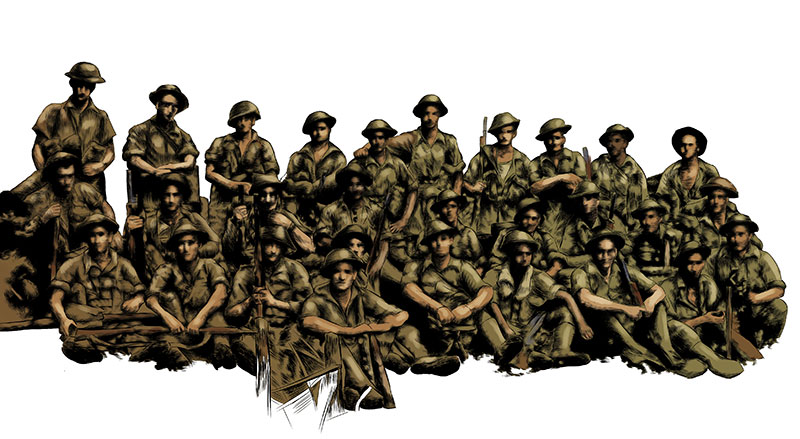
Indigenous soldiers fought skilfully and bravely during the European and Pacific parts of World War 2. Many indigenous soldiers felt it had been the first time they were accepted as human beings and were treated equally based on their skills. The Armed Forces was a place where you were equal and judged as a soldier not by other means. The experience of freedom from racial prejudice was a common experience. This soon ended when they left the Armed Forces.
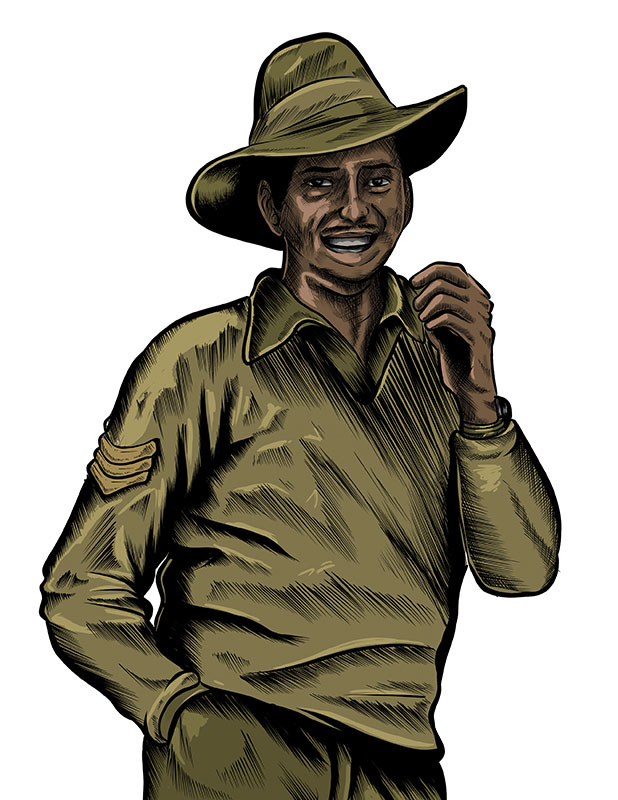
Aboriginal soldiers were involved in all these battles. The most well-known but not the only one, was Captain Reg Saunders. Saunders was the first Aboriginal to be commissioned as an officer in the Australian army. Saunders after enlistment in 1940 was sent to Greece where the Germans had advanced so quickly across Greece in a matter of weeks that the only answer was to escape to Crete. In a short time, Crete was also taken by the Germans. Saunders hid for 12 months and then escaped to return to Australia. He then went to New Guinea to rejoin his battalion as a sergeant. He fought the Japanese in some horrendous battles around Salamaua and by 1944 had been nominated for officer training. He returned to the war as a platoon commander on the top part of New Guinea in the Wewak area. His younger brother Harry, also a soldier in New Guinea, sadly did not survive.
Aboriginal Women in World War 2
By October 1941 a unit was established to recruit women to the Army. The aim was to allow more men to join fighting units overseas.
One of these women who joined was Kath Walker who later was known by her tribal name of Oodgeroo Noonuccal. Her brothers were both in the Army and had been captured in Singapore by the Japanese. She saw it as her duty to be helpful.
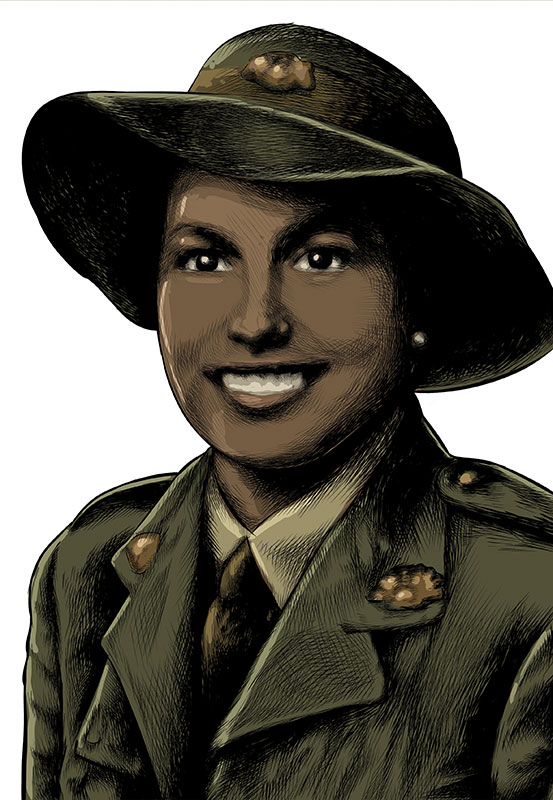
Oodgeroo came from Stradbroke Island off Brisbane. This was her tribal ancestry area, and she remained there for most of her life. She was from the Quandamooka nation of coastal dwelling people.
She joined as a signals operator and was promoted to Lance Corporal. She was one of the many thousands of aboriginal women that joined the armed services and the Women’s Land Army.
After the war Oodgeroo became involved in Aboriginal advancement, wrote a string of best-selling poetry books and served on numerous committees to further the lot of Aboriginal Australians.
Air Force
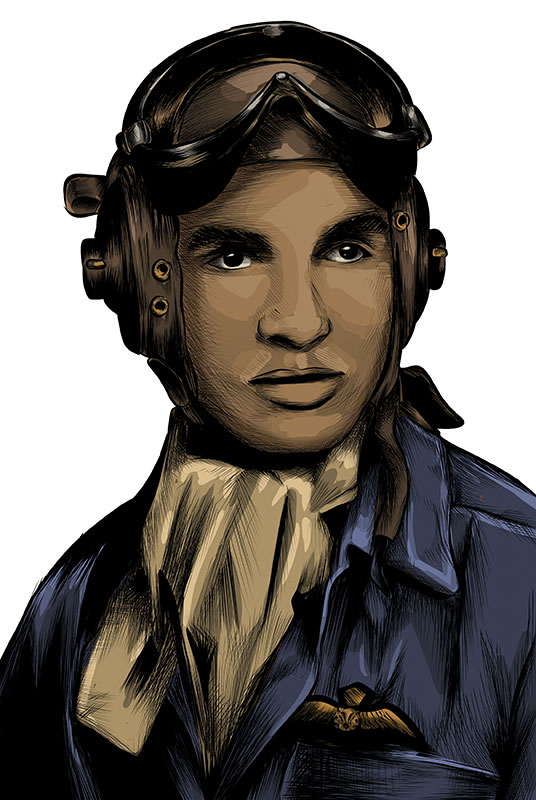
A famous Aboriginal pilot of World War 2 was Len Waters. He was the only Aboriginal to serve as a fighter pilot during World War 2. Born in a very small village called Boomi near Moree, NSW he moved to Queensland at an early age. He worked as a shearer before joining the RAAF in 1942. He studied at night to make sure he passed all his pilot exams. He volunteered to fly and became a pilot in 1944.
Waters started service in West New Guinea. He flew a Kittyhawk to do ground attacks – bombing and firing on enemy positions. The name of his plane was ‘Black Magic’.
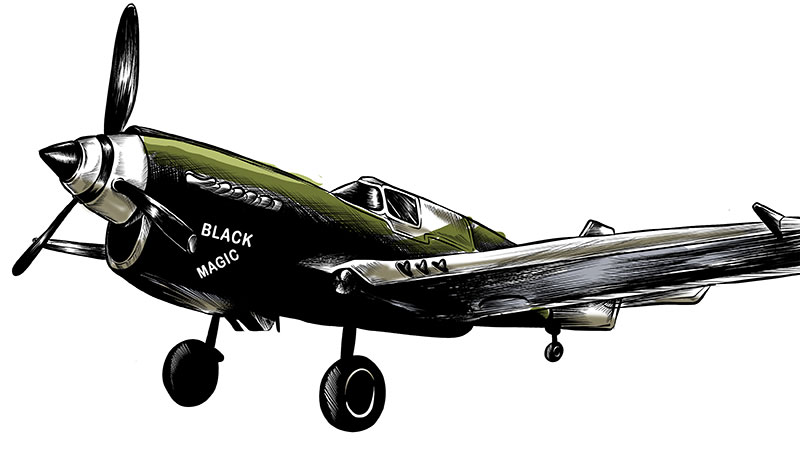
Waters left the air force in 1946 and as he simply said ‘returned to being a blackfellow’. He was not recognized for his efforts until after he had died.
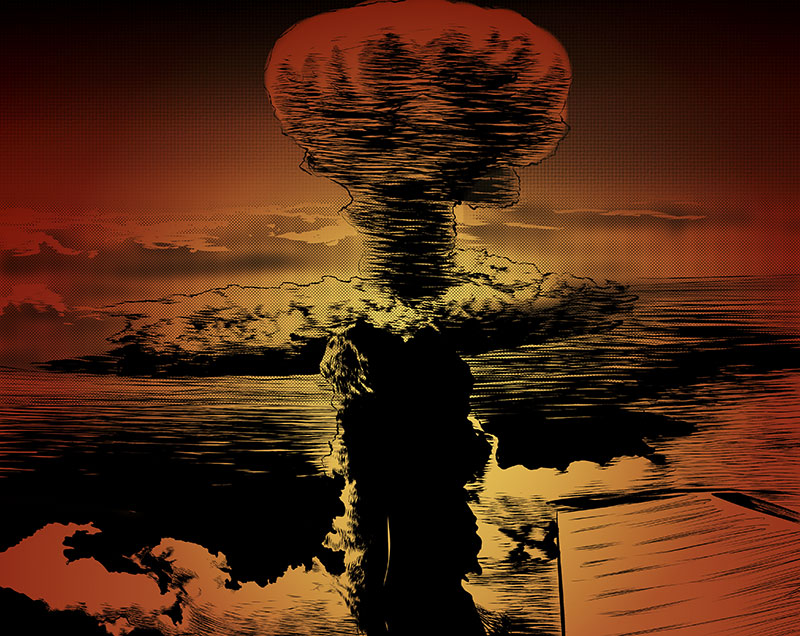
The war ended for Japan when after the dropping of the Atom bomb on both Hiroshima and Nagasaki, they surrendered. Many hundreds of thousands of people were killed. The Atom bomb was a step towards continual ruin as the Russians also prepared to invade the Northern part of Japan. Japan after the surrender was occupied by the allies (Australia, USA, UK, Canada etc). There were at least 5 indigenous soldiers who volunteered to go to Japan at the end of the war.
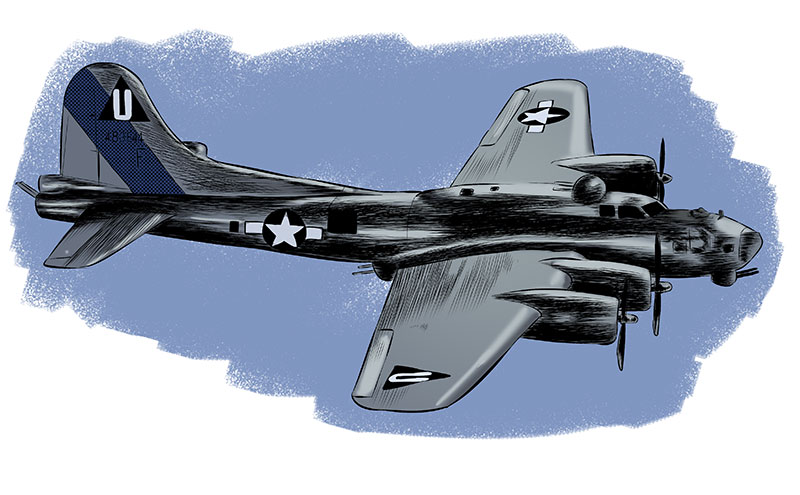
War Has No Winners!
The Second World War ended for Australia with the surrender of Japan. Australia’s major effort had been to defeat the Japanese, but many Australians had stayed on in Europe. Thousands of Australians served with RAAF – the air force in Europe and the Middle East. There were over 3,500 airmen killed in Europe. In World War 2 over 39,000 Australians were killed in Europe and the Pacific.
There were over 30,000 taken prisoner and almost a third of those with the Japanese died due to the harsh treatment. This number included indigenous soldiers.
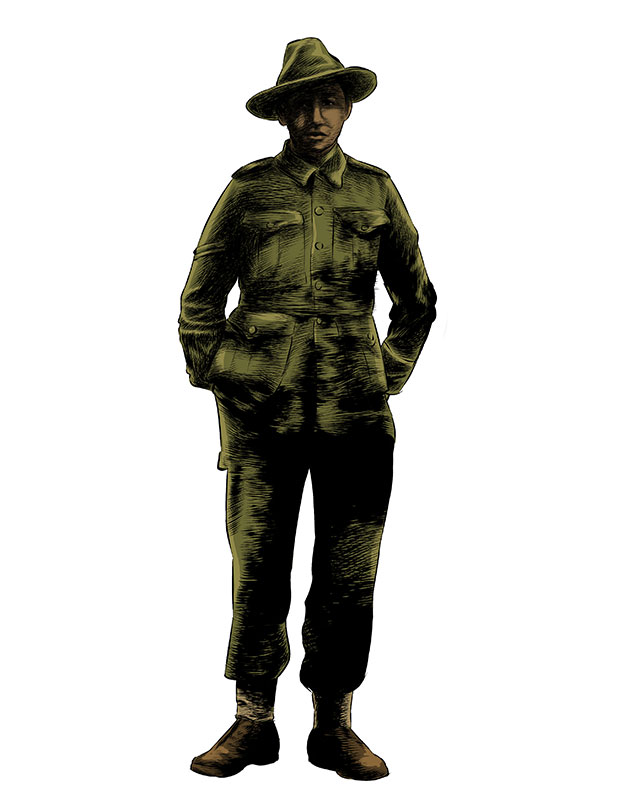
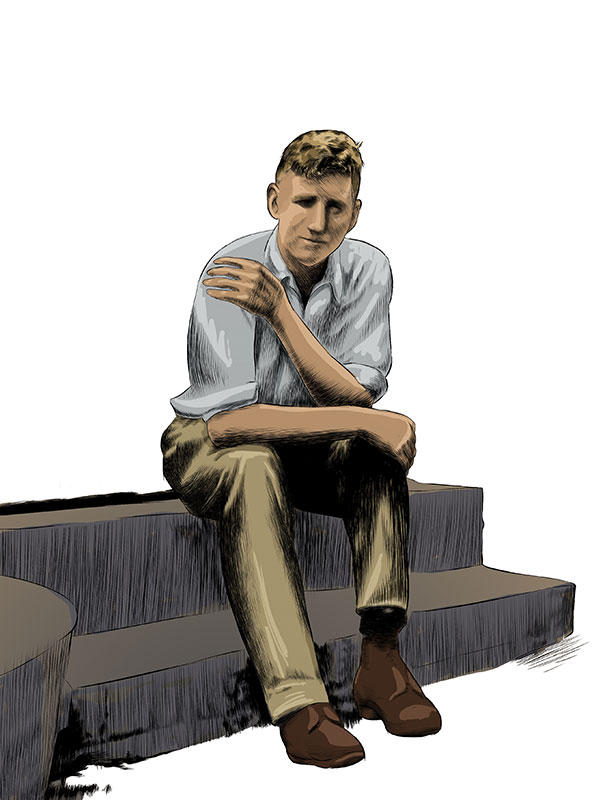
After the war life returned to normal as best it could. Soldiers faced daily battles with mental health and recovering from wounds and trauma. It was a difficult time for many of those that served. Many continued to die from the effects of the war as lives had been permanently damaged. There are no winners in war! These figures show one man going to war as a young and strong man and the returning soldier. A combination of wounds and trauma, sadness of lost friends, and illness from tropical diseases had broken his health. He died in 1953 still a young man! Many returning indigenous soldiers died too early!
Activities
Assessment
Download the assessment for this section.
Online assessment will be added in a future version.
Progress
Section not yet completed.