Indigenous Diggers
Section 2: World War 1
Background
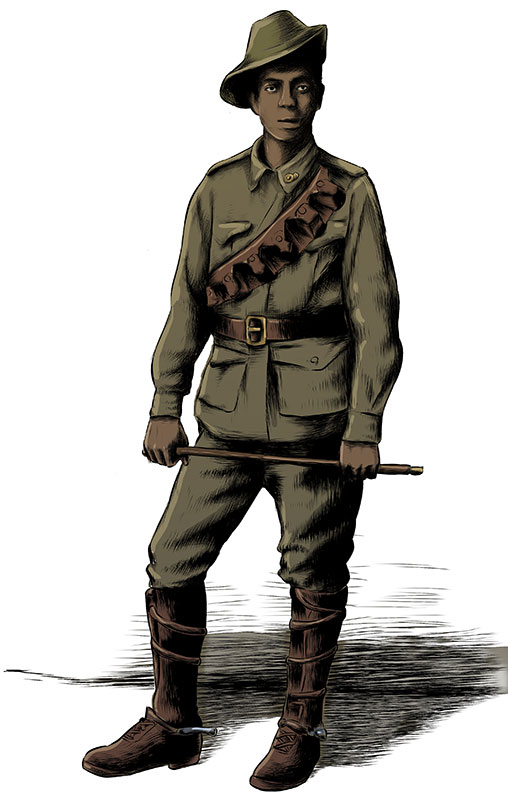
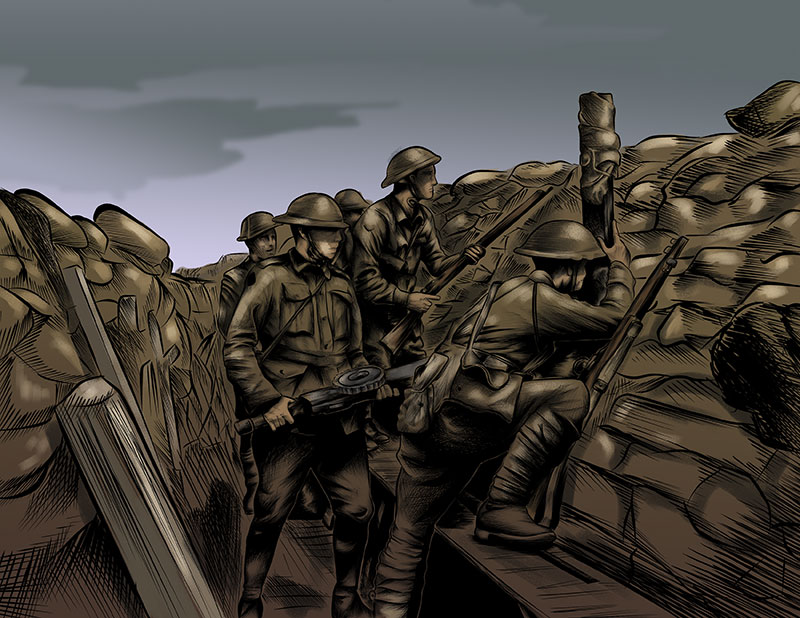
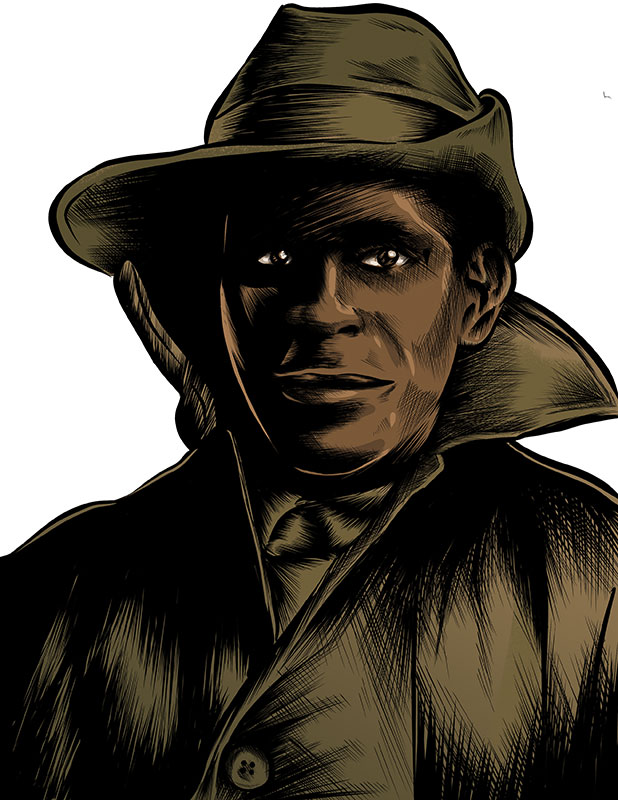
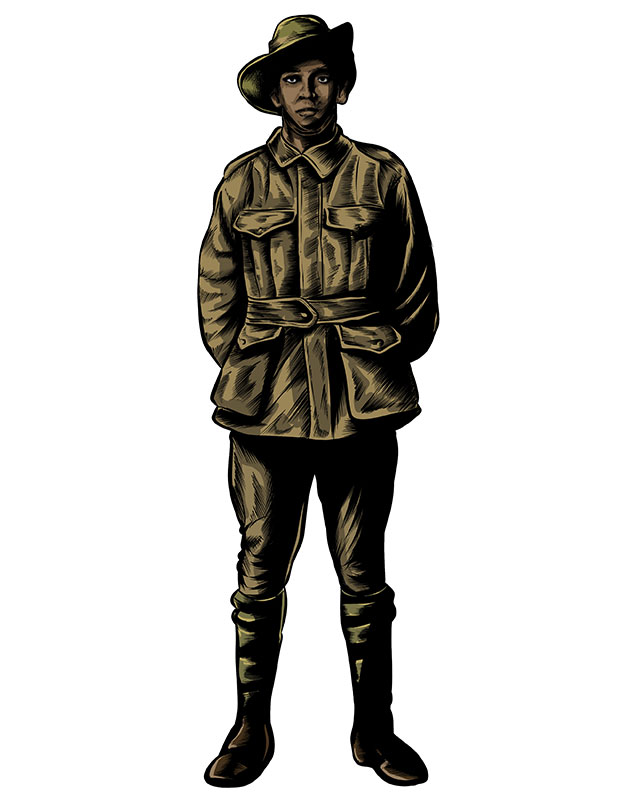
World War One was a major disaster for all countries involved. The number of soldiers and others killed were measured in millions! Countries lost so many young men that they had not recovered by the time of World War 2 which was over 25 years later. This was the first ‘big’ war using all the weapons of large armies. The number of soldiers killed and the length of the war was totally unexpected. Australia fought in this war too! The Australian soldiers suffered not just wounds of bullets but diseases. The health problems were due to the cold damp conditions, rats, dead bodies, rotten food and infected water. The soldiers were gassed by the enemy, suffered permanent mental issues due to fear and living with death ‘shell shock’, and wounded by bits of shrapnel (bomb fragments) and bullets. Australia lost its young men to a terrible war in Europe! The whole of Australia did not recover from these enormous losses and the pain and sadness was felt across families for many generations. Many country towns lost a lot of their young men to this war. The figure is a drawing of Chris Saunders, AIF. He was the father of Reg Saunders an officer who served in WW2 and Korea. Chris survived the war and returned to Australia.
Aboriginal men enlisted and were killed too as part of their love of Australia and support of Britain. The actual number was not known as many signed up as other nations such as Spanish and Indians because Aboriginals were not allowed to enlist. A possible number is more than 1000 aboriginal men. As the war progressed and the urgent need for new troops increased so did the number of Aboriginals joining to become soldiers.
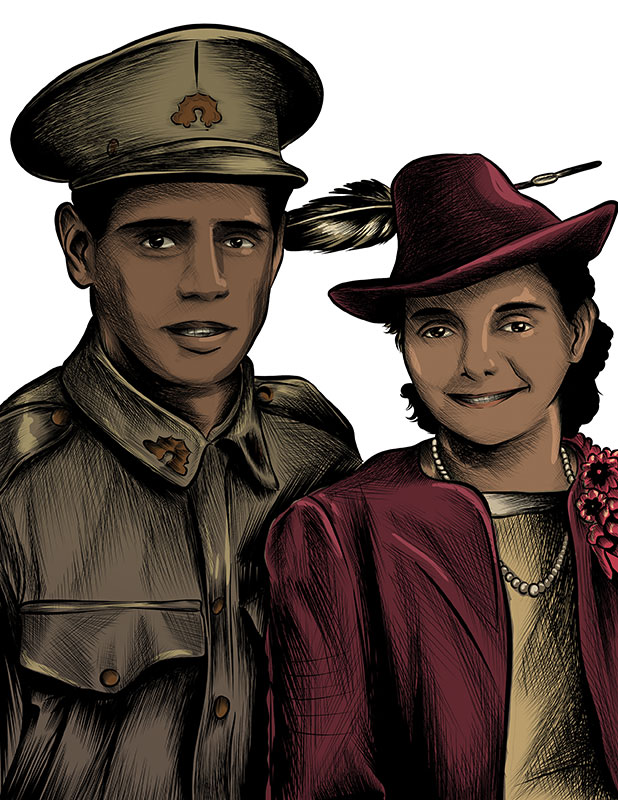
Australia’s population in 1914 – 1918 was about 4.9 million people. Nearly 417,000 joined to go to the First World War. This is approximately, 40% of the total adult male population between 18 to 44 years of age. There were 58,961 killed and 166,811 wounded. You had a 14% chance of being killed which increased if you went to Gallipoli where your chance of being killed jumped to 40%. Half of all the soldiers who joined were wounded or killed.
Aboriginal men fought in all the areas of World War One. The war was not only in Europe for Australian soldiers – it extended into the areas near Turkey, (the Dardanelles), and near Lebanon and present-day Israel.
Why?
World War 1 turned into a major catastrophe because European powers England, France, Germany and Russia, brought all the countries of Europe and elsewhere into a military alliance. This division into friends and enemies meant also agreeing to support your friends in case of military attacks. Turkey for example, took the side of Germany even though Britain was trying to make friends with Turkey. Russia took the side of Britain along with France.
Arms Race
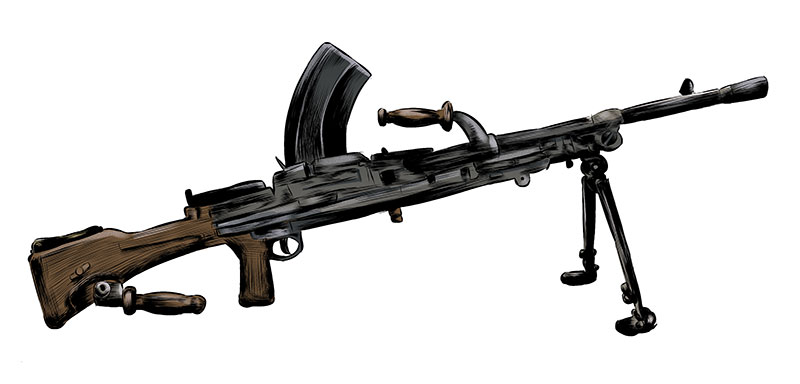
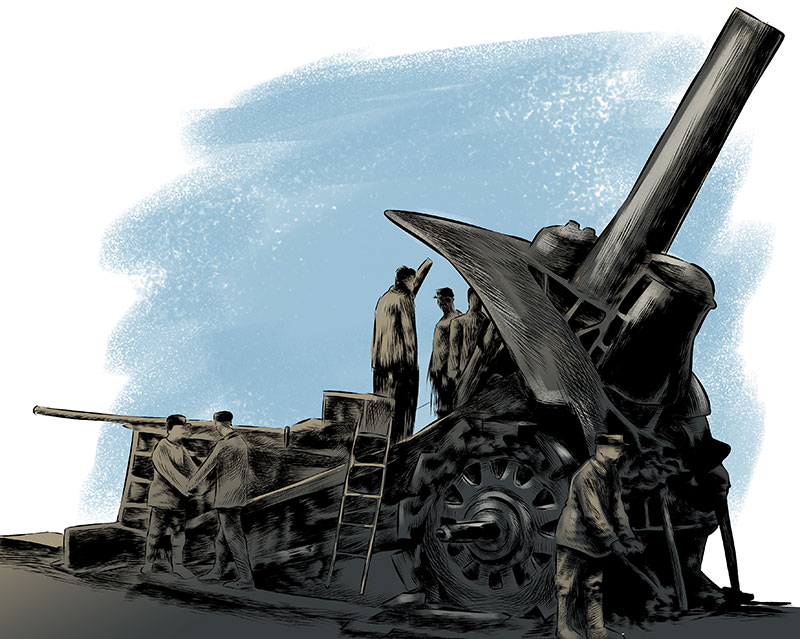
Each country had been rapidly increasing their weapons. These came from factories which could make millions of rifles, guns, and bombs. All the weapons of war were now on a very large scale. The power of weapons, machine guns and very large artillery cannons meant that battles would be on a large scale and the deadly force would kill a lot of soldiers. New chemical weapons using mustard and chlorine gases were being developed for warfare.
This was called an ‘arms race’ to scare the other side. To frighten the other side – each side rushed to form friendships (alliances) and get support in case war started. It became a race for how many ‘friends’ a country had before war started. The problem was that some of these ‘friends’ were very quick to use their new weapons on old enemies. This meant you then had to help them as part of the alliance! War was going to happen sooner than later!
How did it Start?
The war started with the shooting of an Austro-Hungarian Prince Franz Ferdinand by a Serbian terrorist. The Prince was a self-indulgent waster who spent his time shooting little and big animals all over the world including Australia. The Prince did nothing much to help his country but Austria felt compelled to go to war against Serbia. Russia came into the war on Serbia’s side and Germany on Austria’s. This caused continued escalation until all of Europe was at war with each other. The big power was Germany who attacked France. This meant Britain was at war and so was Australia.
Australia’s Role
In Australia the war was seen with great enthusiasm for men to join the fight. Australians wanted to join up and go to Europe to fight. It was going to be quick so everyone needed to enlist and get to the battle as soon as possible.
No-one probably saw the scale and horror of this war! It was going to be a quick war with both sides thinking they would be victorious. What happened had never taken place before – trench warfare started! Both sides did not have the weapons to rapidly invade and move quickly. Stupidly, both sides used the attack in a similar way to warfare in the days of cavalries. Large numbers of soldiers were simply killed immediately by huge artillery bombs, rifles and machine guns. The Battle of the Somme was an example, where Britain lost over 55,000 soldiers killed within several days.
Where did Australian Soldiers Fight?
The Australian soldiers were sent from Australia to Egypt, North Africa. It seemed a long way from Europe, but the plan was to start new war fronts and protect the Suez Canal from Turkey. There was not space for training more soldiers in Britain.
Australians fought in the First World War in three main areas:
Gallipoli from April to December 1915
France and Europe from 1916-1918
Egypt, Palestine and Syria from 1916-1918 – these were mostly the Light Horse regiments.
Aboriginal soldiers fought in all areas of World War 1. There were Aboriginal Light Horse soldiers, artillery and infantry soldiers at Gallipoli and in Europe. Trench warfare started in Europe and also Gallipoli. The Light Horse fought running battles over large distances covered on horseback.
Gallipoli
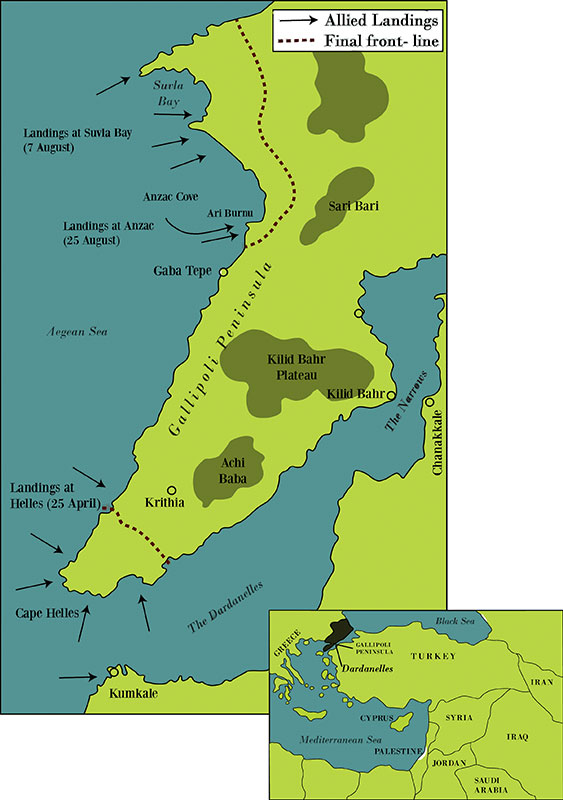
Gallipoli was an area of what is called the Dardanelles. It is part of Turkey and it was important to have control of this narrow sea lane to Turkey and onwards to Russia and other countries in the region.
Turkey joined on the German side and so became an enemy of Britain and France. The shipping lane was controlled by Turkey so Russian supplies could not get through to their southern ports. It was considered important to capture so shipping could be controlled by Britain and France. You will learn a lot more about the World War One and Gallipoli if you study History in later years. This is only a brief outline as to what happened to Australian troops.
Were there Aboriginal soldiers at Gallipoli? There are no specific references to Australian aboriginal soldiers but the number is estimated to be from 50-60 soldiers. This is based on reports from relatives and early photos showing aboriginal soldiers amongst fellow Anzac soldiers. Their efforts were not recorded and this means we have only the information from relatives of their great uncles or great grandfathers to say who was involved.
Australian and New Zealand soldiers were formed into an ANZAC or Australian and New Zealand Army Corp. This was the first major battle as an ANZAC force. The date of the first landing was April 25, 1915, which is date Australian and New Zealand have the ANZAC Day Remembrance ceremonies for all Australian and New Zealand soldiers.
Gallipoli was a disaster with Australians losing over 8,709 dead from dying of wounds, killed fighting and death from disease. This was from April 2015 when they landed to when they escaped by boat in December 2015. Why do we honour such a terrible loss? Every 25th April we remember the Australian soldiers through the ANZAC Day Ceremony. To people from other countries it seems odd to see Australians and New Zealanders pay so much attention to Gallipoli. If it was just a bad battle it is understood but to Australia and New Zealand it was the first time we fought as a country – not as a colony of Britain. Australia and New Zealand were permanently forged together as ANZACs hence the special and enduring friendship we have with New Zealand. We fought as a nation for the first time and endured suffering on a scale not seen before. We became a nation to our people and the rest of the world on the battlefields of Gallipoli. It is the spirit of bravery, mateship and sacrifice we remember as a nation. Australia remembers and honours the spirit of the ANZACs which we chose to keep alive.
Aboriginal Soldiers at Gallipoli
It is believed that over 50 Aboriginal men fought at Gallipoli. It is believed that 13 of these were killed.
Miller Mack was one of the first Indigenous soldiers to fight and possibly at Gallipoli.
The Gallipoli soldiers returned to Egypt. Here they were divided into two groups. The Light Horse and the Infantry. The Light horse were to stay in Egypt and the rest would go to Europe.
Egypt, Syria and Palestine
After Gallipoli the Light horsemen stayed in Egypt and were involved in many skirmishes with Turkish army and also their supporters.
There were about 100-120 Aboriginal Light horsemen! This made sense as Aboriginals were superb athletes and skilled stockmen. Trooper Horace Thomas Dalton served in the 11th Light Horse Regiment. Horace was a young 19-year-old from Queensland. He fought for over a year in numerous battles across Egypt and Palestine.
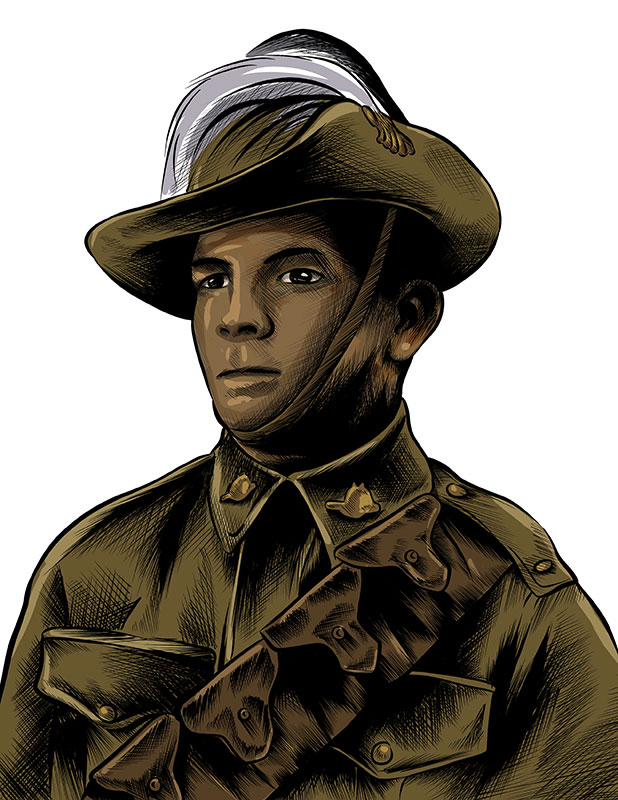
The Light Horsemen and their mounts had to survive extreme heat, harsh terrain and water shortages. Nevertheless, casualties were comparatively light when compared with Gallipoli or Europe. There were 1394 Australians killed or wounded in three years of war. This campaign began in 1916 with Australian troops participating in the defence of the Suez Canal and the Allied reconquest of the Sinai Peninsula. In the following year Australian and other allied troops advanced into Palestine and captured Gaza and Jerusalem; by 1918 they had occupied Lebanon and Syria. Below is a drawing of Harold Arthur Cowan who served in the Imperial Camel Corps. Enlisted 6 November 1917.
France
The battle lines for the war in Europe went from Switzerland to Belgium. Along the whole way armies faced each other across the lines of trenches that were dug for protection. This was called the ‘Western Front’. This line of trenches was where both sides tried to defeat the other side. This was a series of major battles which cost hundreds of thousands of lives.
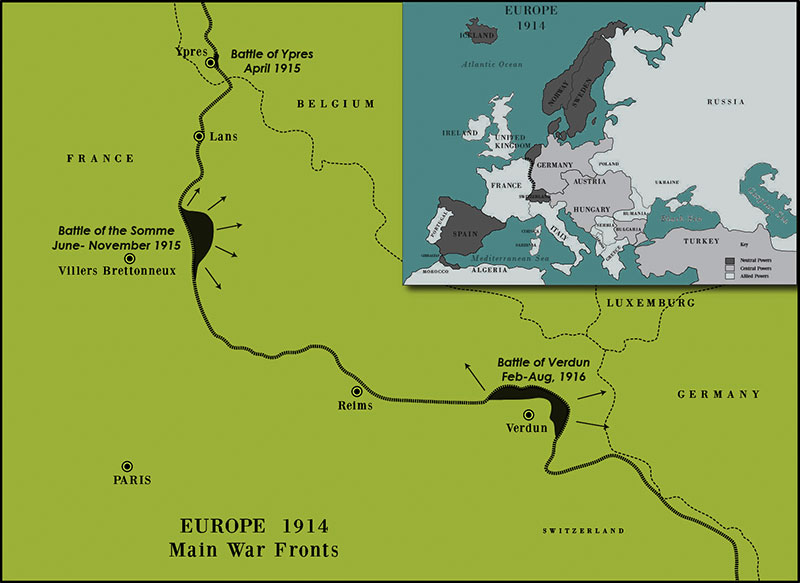
Aboriginal soldiers were involved in all the major battles. We know this from photographs of aboriginal soldiers at the battlefront in France, relatives of these men recording their stories and official archives outlining the names and addresses.
The battles in France were horrific – huge numbers of soldiers were killed in single battles. Australian soldiers fought in many of these battles.
Battle of the Somme
The Australians joined the Battle of the Somme after coming from Egypt. The Somme Battle was a disaster for Germany and along with Britain and France. The combined losses were over a 1 million men during the 6-month battle. Australians fought many battles related to the Somme.
Fromelles
Australian soldiers from Gallipoli in July 1916 attacked a ridge called Fromelles to draw German soldiers away from the Somme battle. The Australians had to cross open ground and many were killed. In this battle over 5,000 Australian soldiers were killed or wounded.
Pozieres
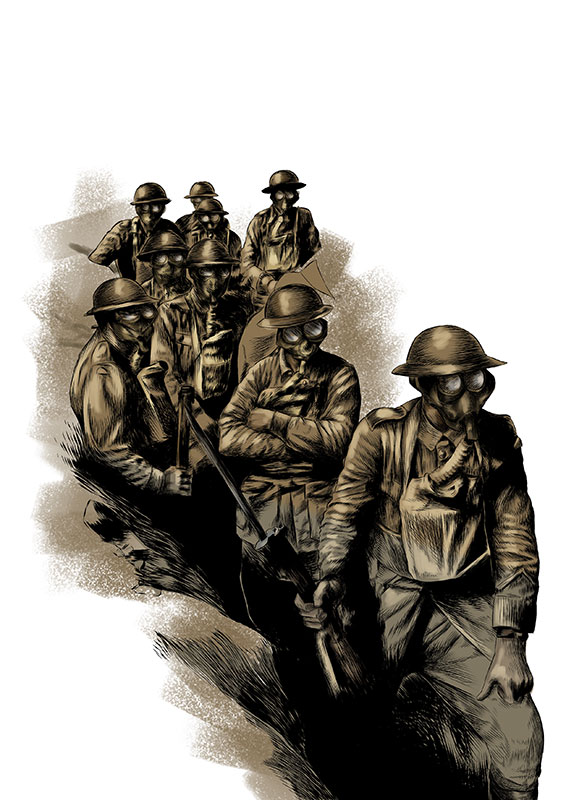
The Somme Battle raged close to a village called Pozieres. At the end of July 1916 Australian soldiers attacked and took the ruined village of Pozieres. The Germans quickly rained artillery shells on to the village. This resulted in many killed and wounded. The figure left shows Australian soldiers wearing gas masks. Gas was used as a weapon. Gas canisters would be fired from guns and land amongst the trenches. The gas would leak down into the trenches. Gas masks were worn to filter the air to stop the gas being breathed into the lungs or into the eyes where it caused blindness. If the gas was breathed in it would damage the lining of the lungs causing the soldier to suffocate or be sent to hospital. It was a terrible weapon which was banned from future wars.
Villers Bretonneux
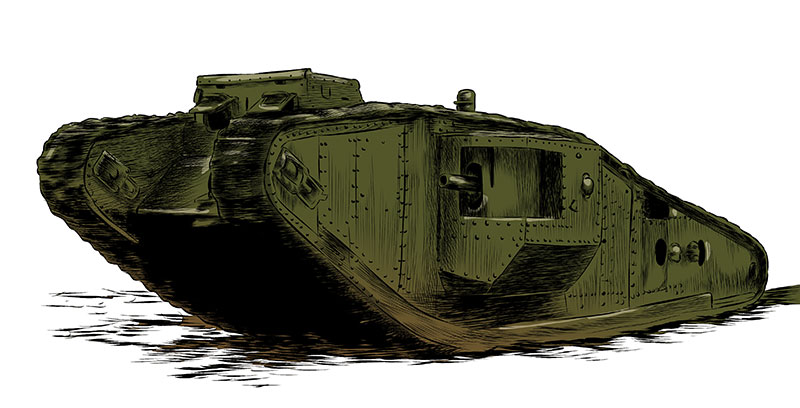
On the 24 April 1918 – this was the first tank battle between German and British tanks. The town was overrun by the German forces.
This image is of an unknown Australian Indigenous soldier. We know he was in the Battle of Somme as his photo was taken in the village of Villers Bretonneux
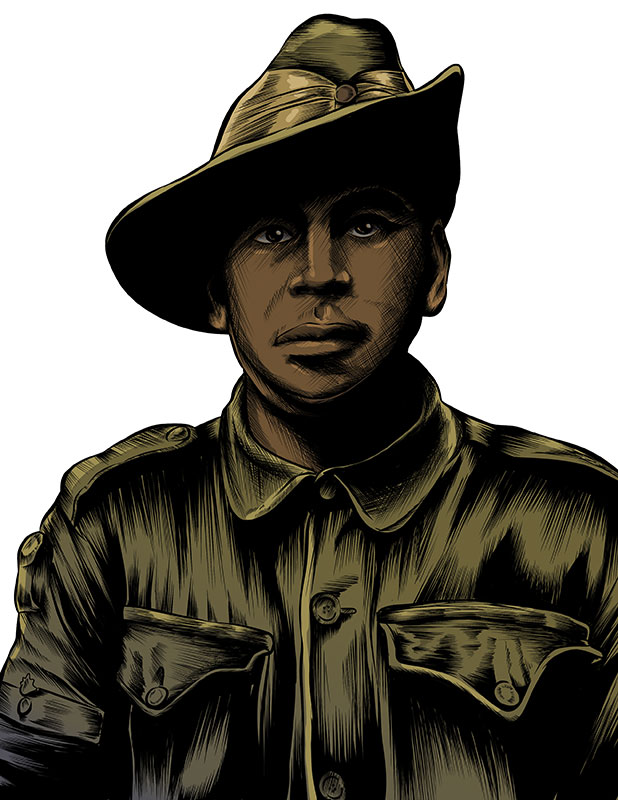
That same evening the Australian forces of two brigades fought and took the town back through an all-night operation They attacked and destroyed the machine gun crews and used swift and daring ways to overcome the German forces. The date was April 25, 1918.
The Mayor of the town wrote the following:
“The first inhabitants of Villers-Bretonneux to re-establish themselves in the ruins of what was once a flourishing little town have, by means of donations, shown a desire to thank the valorous Australian Armies, who with the spontaneous enthusiasm and characteristic dash of their race, in a few hours drove out an enemy ten times their number…They offer a memorial tablet, a gift which is but the least expression of their gratitude, compared with the brilliant feat which was accomplished by the sons of Australia…Soldiers of Australia, whose brothers lie here in French soil, be assured that your memory will always be kept alive, and that the burial places of your dead will always be respected and cared for.”
The battle’s success came at a great cost of over 1200 Australian soldier being killed.
In the school classrooms above the blackboard is a note that is always there – Let us never forget Australia!
ANZAC Day on the 25 April remembers the Gallipoli landing and the terrible cost of becoming a nation at war. This is also the date in France of one of Australia’s greatest victories at Villers Bretonneux. This was an important victory and was the start of the end of the war for Germany.
General Monash
Soldiers were grouped like in cavalry battles and swarmed the enemy lines. The difference in World War 1 was sub-machine guns, highly accurate rifles, bombs and barbwire. Soldiers swarmed like crabs on a beach! They were sitting ducks! It was nearly the end of the war when an Australian General – Monash pioneered a new type of warfare. This warfare used machines, steel and advancement of armaments followed by soldiers. Moving the steel and weapons to the front and then clearing a way through for the soldiers. This led to many victories and the final surrender of Germany. The lesson was not lost on the German generals – it was studied in detail. The next time it was used it was by Germany in World War Two and it was called blitzkrieg (lightning war)!
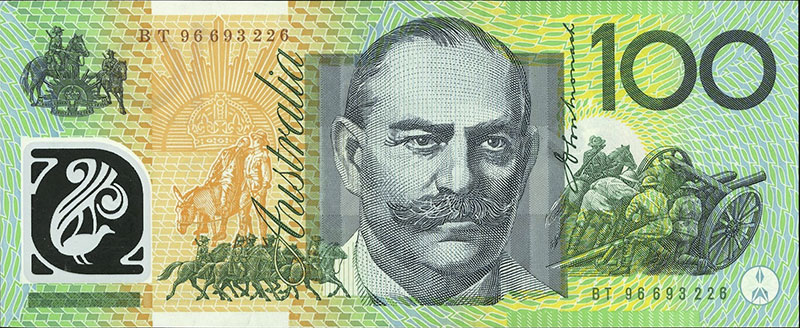
General Monash was able to develop a form of warfare which was able to beat the Germans. This was widely adopted by the British and sped up the final end of the war.
Germany surrendered and had to agree to the terms set out by France and Britain. The harsh settlement on Germany meant it could never recover so the world would be at war again with Germany in less than 25 years.
For Australia, as for many nations, World War I remains the highest number of soldiers killed and injured. From a population of fewer than five million, 300,000 men enlisted, of whom over 60,000 were killed and 156, 000 were wounded, gassed or taken prisoner. The cost to Australia was immense and lasted for many generations. The lucky soldiers to survive came back with a life ruined from war – nightmares, anxiety attacks, sad memories of dead friends and unable to adjust to normal life again.
Activities
Assessment
Download the assessment for this section.
Online assessment will be added in a future version.
Progress
Section not yet completed.