Indigenous Studies
Section 4: Indigenous Australian Art through Time
Evidence points to the fact that humans first arrived in Australia between 65,000 and 60,000 years ago. Given that Indigenous people have lived continuously and uninterrupted (until the last 200 years) on the continent since then, Australian Indigenous art is the oldest ongoing tradition of art in the world. So far, some of the earliest surviving examples of this art found are the rock carvings in the Pilbara in Western Australia and in the Olary region of South Australia which may be as much as 40 000 years old. However, accurate dating of these carvings is difficult as the rocks, in which the carvings are made, may be hundreds or thousands of millions of years old. As most rock art is also made with mineral paint made from rocks, its age cannot accurately be measured either.
In June 2012, an archaeologist, Bryce Barker, from the University of Southern Queensland, found evidence that an outback cave in the Northern Territory, known as Nawarla Gabarnmang, had been occupied for 45,000 years. There are thousands of images on the walls of this cave and Barker was able to date one of them. In measuring the age of this artwork, Barker announced that he has found the oldest piece of rock art in Australia that has been accurately dated: an Indigenous work created 28,000 years ago. The rock art had been made using charcoal, so radiocarbon dating could be used to determine its age.
Activity 4.1 – Investigating the dating process.
This Internet research activity can be done in teams, with each member of a team, or teams, tackling a separate question card. At the end of the research, work together to produce a report which describes and summarises the dating tools that are available for anthropologists and archaeologists to use. Use question card 8 in a final discussion after the report is finished.
Changes in culture and art
Cultural developments of great significance to Aboriginal communities are reflected in many different styles of rock art appearing in different regions across Australia. There were changes in style over time from the ancient, engraved symbols to the colourful X-ray art of the north and the vivid hunting scenes of east and west. Such differences reflect changing religious beliefs and rituals.
The Kimberley, Western Australia
Kimberley rock art has been painted over a very long time and the Kimberley has one of the greatest concentrations in the world. This art is of national and international importance and of particular concern to local Aboriginal people. For these Traditional Owners, the rock art is a fundamental part of a cultural landscape that was created by the ancestors who remain within Country.
The earliest Kimberley art re-discovered is a piece of ochre painted material that had fallen from the roof of a cave at Carpenter’s Gap. It has been dated at over 39,000 years old. This discovery suggested some form of rock-painting occurred that early, but researchers do not know what was depicted.
The rock art of this region shows a sequence of distinctive figurative styles depicting changes in the natural environment as well as continuity and change in the cultural environment. It seems that successive art periods may have occurred at times of changing climate as sea levels rose at the end of the ice age and the ensuing flooding of the coastal plain. The sea level and the shoreline only stabilised in its present-day position, and the present climate and environment settled to its current conditions between 6 – 7000 years ago.
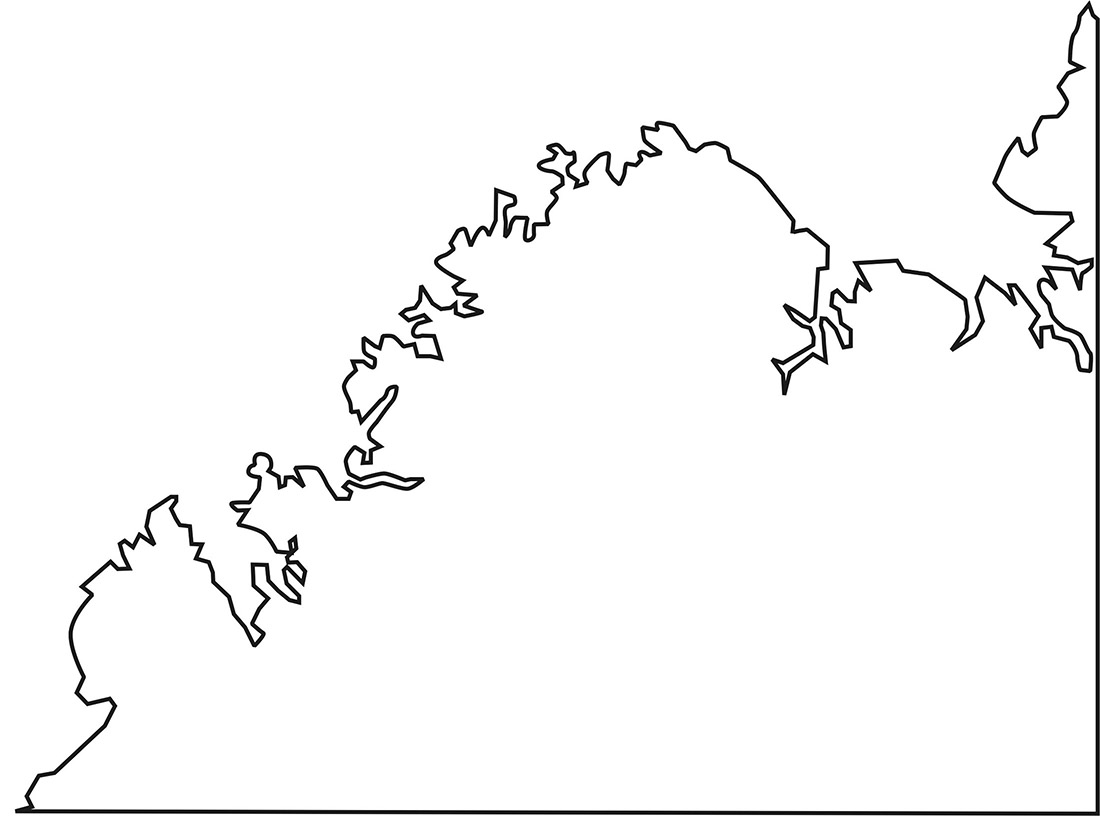
Activity 4.2 – The changing face of the Kimberley over time – Internet research
Use the Internet and a suitable search engine to draw an outline of where the Kimberley coastline existed 20 000 years ago. How would this changing coastline have affected the people who lived on the coast?
Activity 4.3 – So, you think you would like to be an archaeologist?
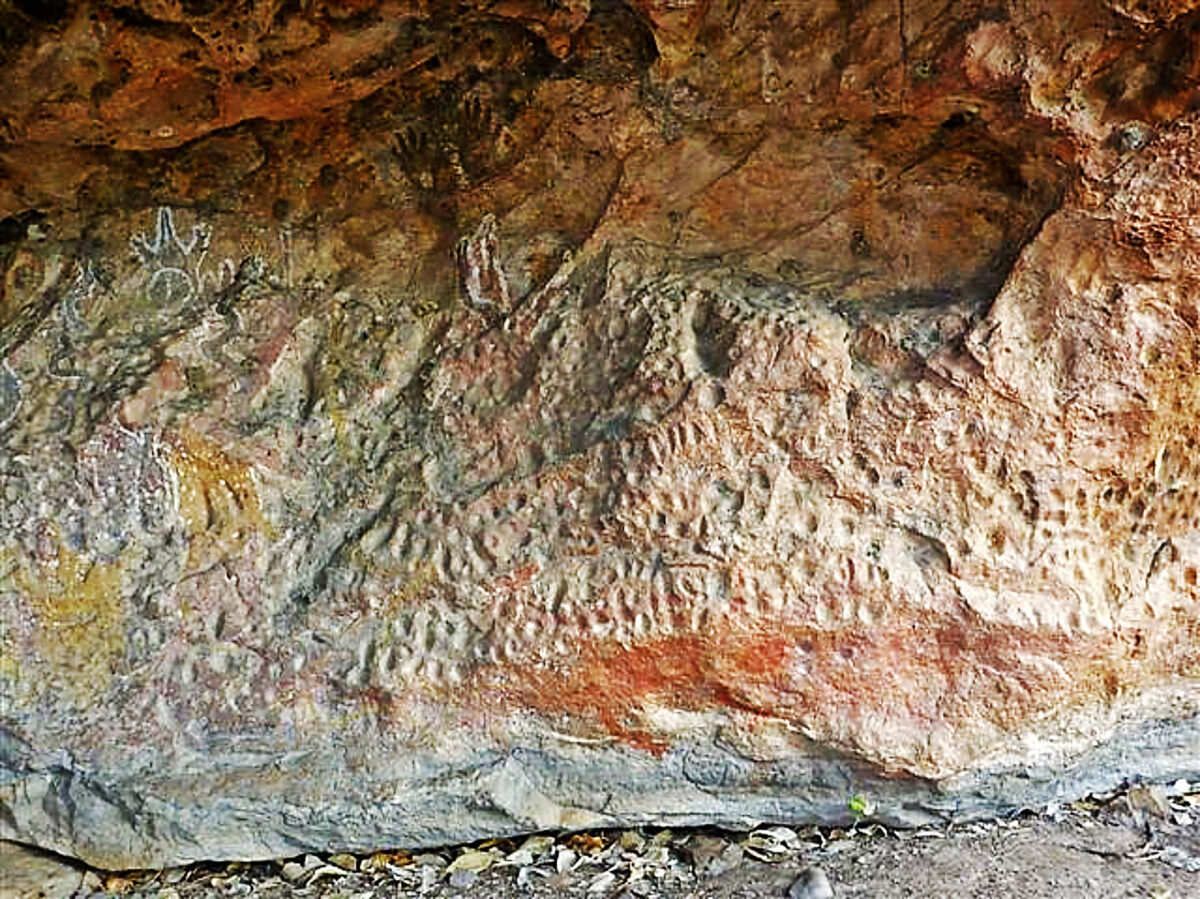
Cupules are the earliest surviving rock art that are known about in the Kimberley. They are carved or pecked pits which form a kind of ‘cup’ mark in rock surfaces. Cupules are often arranged to cover vertical surfaces in orderly, tightly packed rows.
A tourist took the photo above at a rock art site off the Gibb River Rd in Western Australia. She has written to you, asking if the indentations are cupules.
What steps would you need to take to give an accurate answer to this question?
What answer would you give to the tourist?
Gwion Gwion paintings in the Kimberley
The most famous examples of Kimberley rock art are the Gwion Gwion paintings, formerly called Bradshaws, which depict slender dancing figures in ochre and black. Joseph Bradshaw found the original sites in 1891 on the Roe River in the north-west Kimberley and was the first European to see this distinctly different style of cave painting with images of large, finely painted and elegant human figures in elaborate head-dress. They often appear to be dancing, with decorative headdresses and pompoms on the arms and legs.
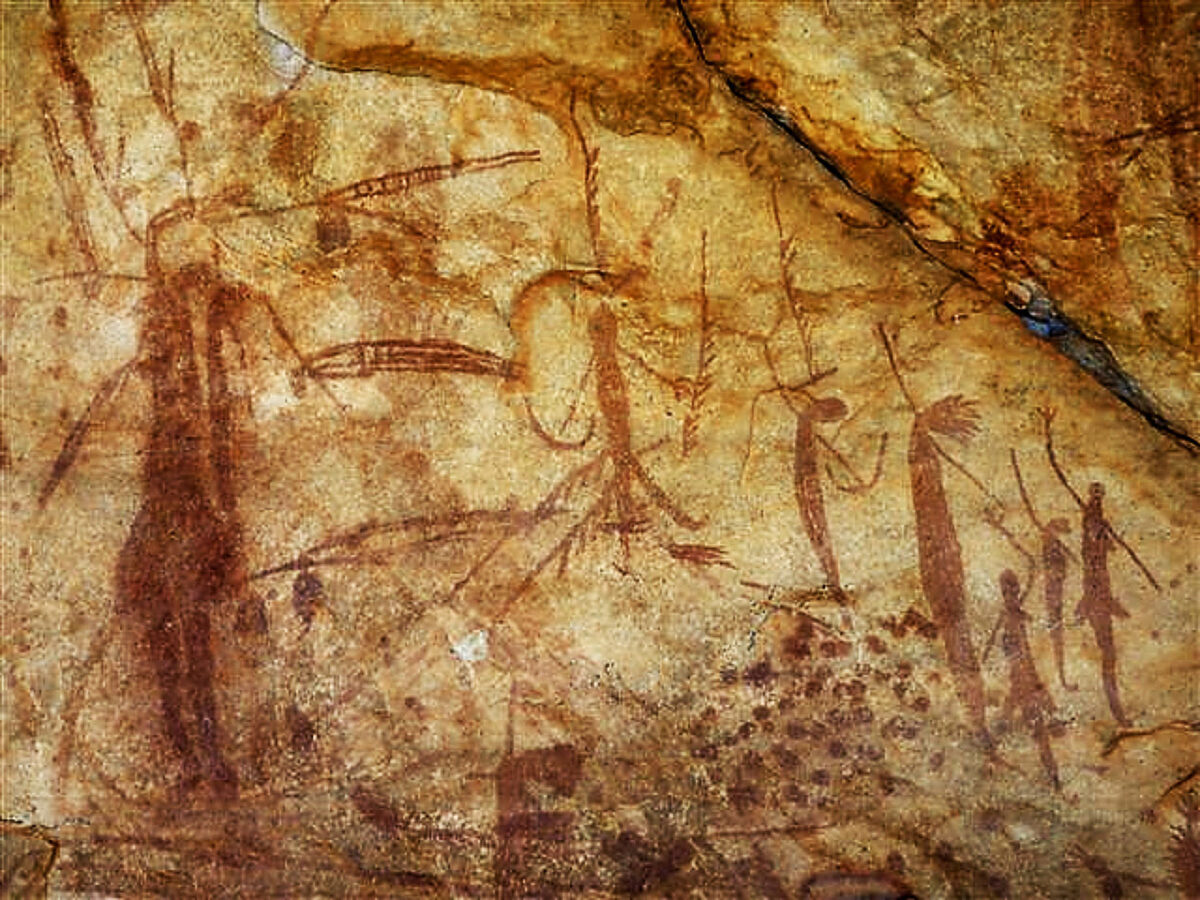
One form of Gwion Gwion art, Mitchell Falls WA Source: M.A. Muir.
Since Bradshaw, many researchers have presented theories on the origins and age of these extraordinary artworks. They have become the focus of extensive research, heated debate and many far-fetched theories about their origins. An early conclusion was made that these paintings were done by people of an ethnic origin other than Aborigines. In denying this, Aboriginal people argued that the researcher involved failed to listen to them in regard to the significance that the paintings had in their culture. The distinct images have always played an important part in Indigenous Australian cultural heritage and have their own relevance to local people. Indigenous people say that some of the problem is due to misunderstandings with the local Indigenous English language used when Indigenous owners speak with Australian researchers of European origin.
Activity 4.4 – A Matter of interpretation: Internet research leading to an Exposition Essay
Task: There are many sites and many pages on the Internet devoted to information and speculation about these paintings and their origins. After collecting, collating and summarising information about debates on the Gwion Gwion paintings, write an exposition that outlines the importance of consulting with and including Indigenous people in any research on their art.
Activity 4.5 – Dating Rock Art
Background: While Gwion Gwion rock art is best recognised from the depiction of graceful, active, long-bodied humans, this art tradition is in fact a complex one, incorporating a number of distinct styles, which appeared to have been developed and changed over time. Suggested dates have varied from 5000 years old to at least 17,000 years old although some experts believe they may be up to 60,000 years old. Scientists continue to work on ways to get accurate dates on these extraordinary works of art.
The drawing below was done by Joseph Bradshaw in April 1891 in the Prince Regent River area of the Kimberley when he copied some rock art that he’s found. It includes Gwion Gwion figures but also includes other forms of art.
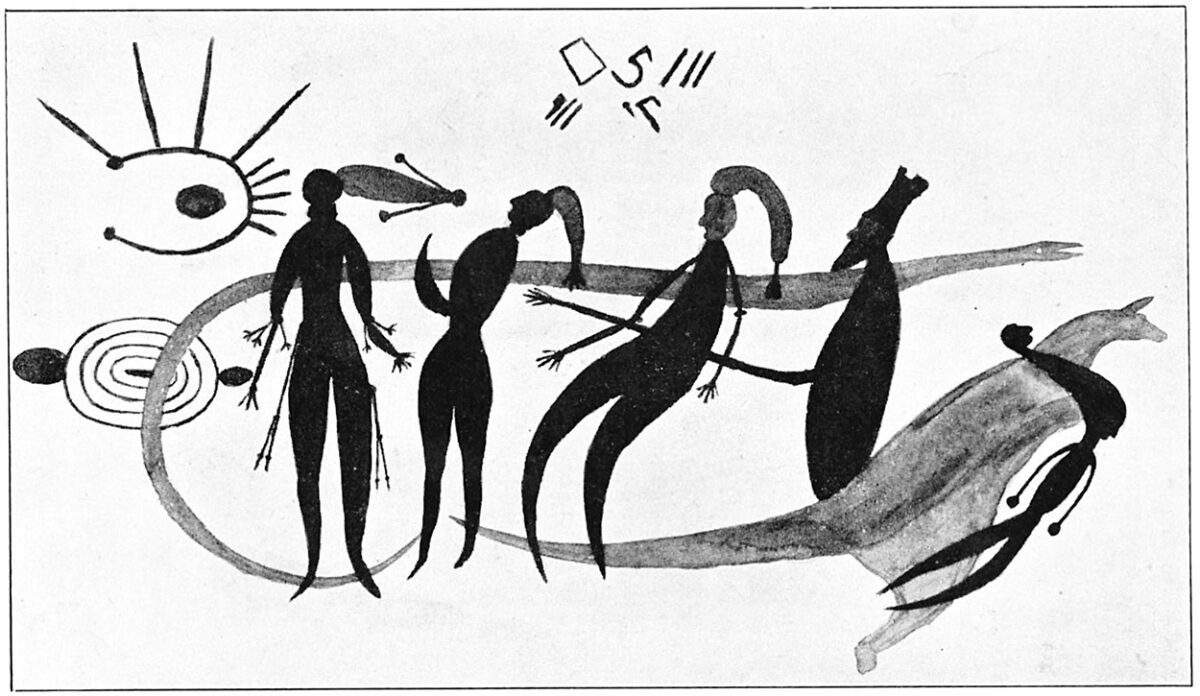
http://upload.wikimedia.org/wikipedia/commons/7/7b/Drawing_of_Bradshaw_art.jpg
Number the images in the drawing according to the order in which they were drawn on the surface of the rock.
Explain how you decided on the order you have numbered.
Did you have any problems in deciding on the order of the paintings? If so, what other information would assist you in making these decisions?
The traditions of touching up and adding layers to older pictures produce a valuable record of change. In some rock galleries, it is possible to see changing styles of art layered in the drawings. In other areas, where new art was drawn over older art, it is even possible to see a change in the animals represented such as a change from water animals to more land animals showing how the environment changed over time.
Look at a rock art painting and indicate the activity and draw the main characters from this painting below.
Wandjina paintings of the Kimberley
At least 4,000 years old, Wandjina figures are a living art form representing ancestral beings that are still painted today. The Worrorra, Wunambal, and Ngarinyin people of the north-western and central Kimberley say that the Wandjina are the creator beings of the Dreaming, and that they made their world and all that it contains. Their representations are found in many rock art sites in caves and rock shelters throughout the Kimberley.
Wandjina are usually painted as full-length, or head and shoulder, figures, either standing or lying horizontally. Their large mouthless faces feature enormous black eyes flanking a beak-like nose. The head is usually surrounded by a band with outward radiating lines. Elaborate head-dresses are both the hair of the Wandjinas and clouds. Long lines coming out from the hair are the feathers which Wandjinas wore and the lightning which they control.
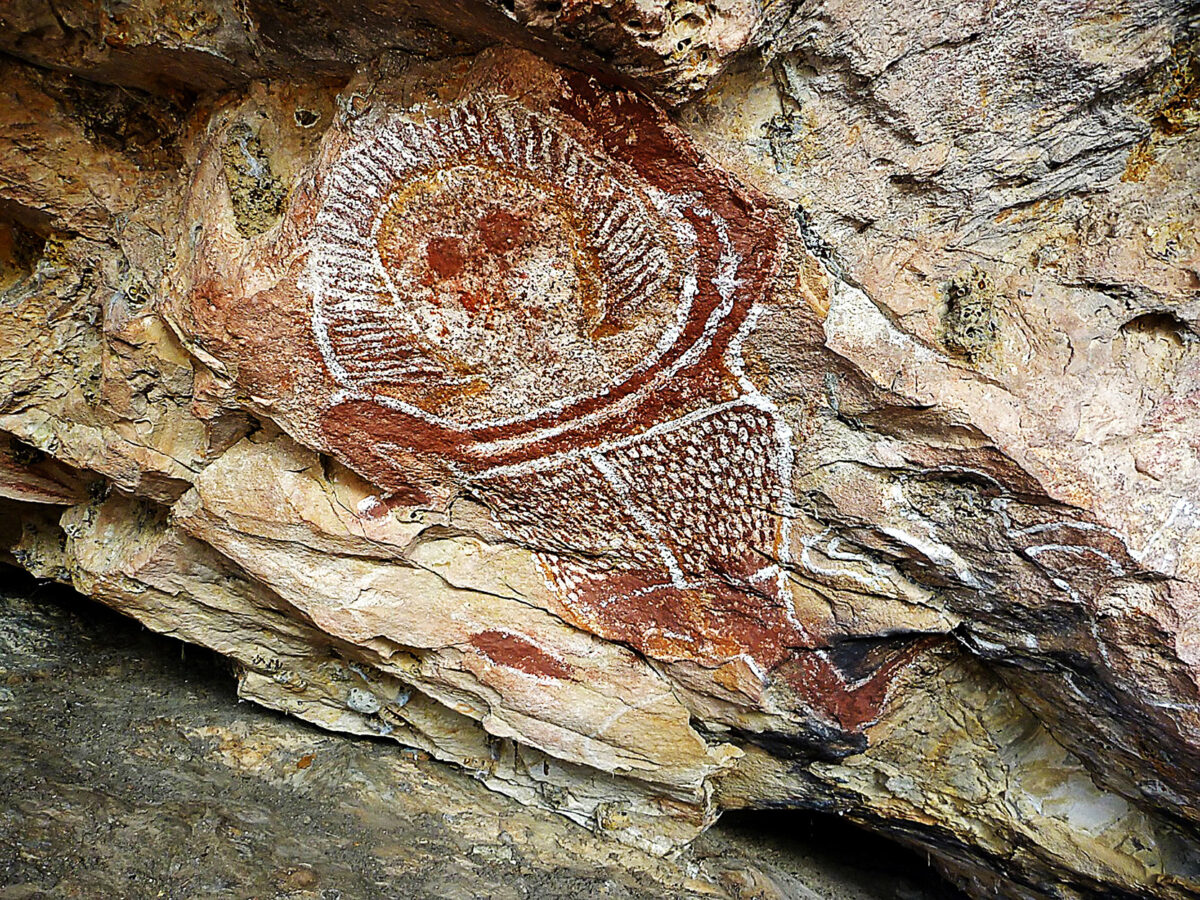
Rock Art, Gibb River Rd, East Kimberley, WA Source: M.A. Muir
Activity 4.6 – Internet research: Compare and contrast
Wandjina figures are still painted today, and you will find many examples on different websites associated with modern Indigenous Australian art. Your task is to compare and contrast the use of these figures in ancient drawings with those done by Indigenous people today. Before you start, make sure that you know how to write a comparison and how to write about contrasts.
Activity 4.7 – Research, Debate and Discuss
Some background comments on activity in the Kimberley
Extract from “The Australian Mining Industry in the early 21st Century”
We are arguably in an era in which the mining industry’s importance to the continuing economic growth and competitiveness of Australia has never been stronger. As many of you know, it is an industry that is both immensely challenging and laden with opportunity.
It is also highly topical and in recent times has been the subject of some of the most robust debates in this country’s history. Sometimes of course, we’d all like a little less debate and a lot more agreement.
Extract from “The Bradshaw Foundation: Ancient Rock Art of the Kimberley
The number of rock art sites in the Kimberley region, both for the Bradshaw (Gwion Gwion) paintings and the Wandjina paintings have been estimated to be over 100,000 in number, but only a fraction of these have been recorded. For this reason, the controlled management of this region of Australia is vital in order to control the preservation of Australia’s oldest artistic and irreplaceable legacy.
Read more: http://www.bradshawfoundation.com/bradshaws/bradshaw_paintings.php
Extracts from article “A precious cultural heritage faces an uncertain future”
Rock art is an archive of indigenous arts stretching back tens of thousands of years. It also is a major component of world art history. Many sites are stunning and powerful….
There is a renewed push to expand industry in the Pilbara where some of Australia’s most outstanding rock engravings are located – more industrial infrastructure in the Dampier Archipelago and rail lines through the supposedly protected Woodstock/Abydos reserve. This is already after engraved boulders were moved off the land in the Pilbara using cranes to make way for industrial development….
…. Australian rock art sites provide unique insight into extinct species, climate change, Indigenous knowledge, culture contact, spirituality, history and relationships to land but we continue to sit on our hands. Or do we?
Extracts from article “Pilbara Aboriginal art faces new industrial threats, even though it’s been found worthy of World Heritage listing.”
However, The Friends of Australian Rock Art (FARA), a group of rock art experts and heritage supporters, say two worrying threats loom just as this greater global recognition is being mooted.
FARA Chair Judith Hugo says nearly 20 per cent of the rock art precinct has been destroyed or disturbed in recent decades to make way for the Northwest Shelf gas processing plant, a fertiliser plant and other industry activity on the Burrup.
Role Play:
Each of the roles below has an interest in or opinion about the value of ancient Indigenous art in Australia. Your team will be allocated a role and asked to defend the stance taken by a person in that role. You task is to deliver a 3–5-minute presentation in defence of this stance, by finding, processing and collating background information.
Arnhem Land – X-ray Art
The “X-ray” tradition in Aboriginal art developed about 4000 years ago and continues to the present day. This style depicts animals or human figures in which the internal organs and bone structures are clearly visible. In many instances, the paintings show fish and game species from the local area.

Fish with internal detail. Burrunggui (Nourlangie Rock), Kakadu NP, Northern Territory.
Source: M. M. Watts.
To create an X-ray image, the artist begins by painting a silhouette of the figure, often in white, and then adding the internal details in red or yellow ochre. Early X-ray images depict the backbone, ribs, and internal organs of humans and animals. Later examples also include features such as muscle masses, body fat, optic nerves, and even breast milk in women.
Activity 4.8 – Analysis of an X-ray painting
The painting of fish above shows several internal features. Reproduce one of the fish drawings from the photo above in the space below and label the internal features that you can identify.
Hint: Need some help? Put the words “anatomy of a fish” into your favourite Internet search engine and look for a labelled diagram.

Some works created after European contact show rifles. Arnhem Land, Northern Territory.
Source: M.A. Muir
Activity 4.9 – A drawing activity
A wall of more than 1500 Aboriginal rock art paintings in northwest Arnhem Land in the Djulirri rock shelter records Aboriginal contact with Maccassan traders from Sulawesi and Europeans from the early sailing ship days right through to WWII. Alongside paintings said to be more than 15,000 years old, there are works that depict a biplane, a bicycle and a gun.
Indigenous people made the art records above when they met up with people from other lands and cultures. What would they have drawn if they suddenly came into contact with Australians from other backgrounds today? On a separate sheet of paper, design and draw an artwork that would represent some of the most obvious objects found in everyday Australian life now.
Assessment
Download the assessment for this section.
Online assessment will be added in a future version.
Progress
Section not yet completed.