Indigenous Studies
Section 1: Rock Carvings – Petroglyphs
Art has always been an important part of Aboriginal life and the oldest surviving art forms found in Australia are rock carvings. Rock carvings are usually found in the open on bare rock surfaces. These carvings can be very large. For example, in the Sydney sandstone district, there is a whale 13m long and 3.5m wide.
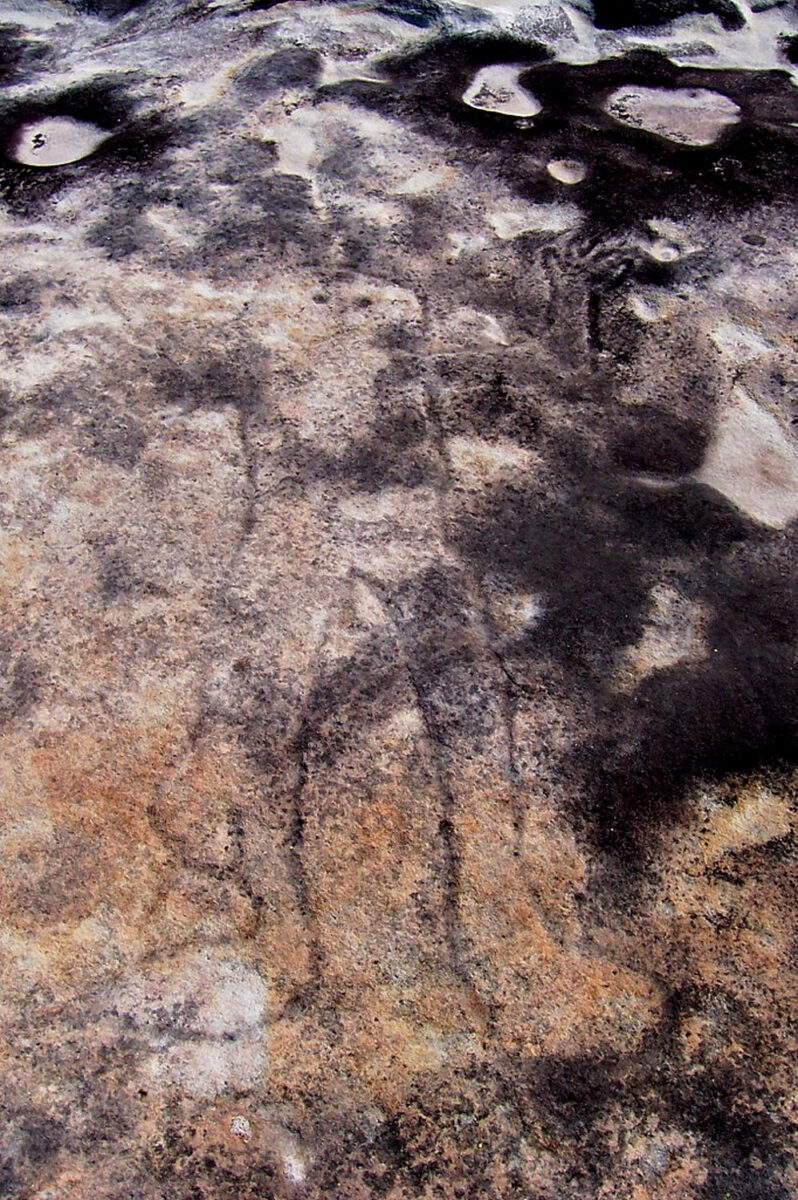
Image source: http://upload.wikimedia.org/wikipedia/commons/a/a2/Ku-ring-gai_Chase_-_petroglyph.jpg
The name petroglyph is given to any figure that has been deliberately engraved, incised, pecked, carved, or scratched into a rock surface.
Activity 1.1: Dictionary practice. PDF print exercise page
Go through the text above again and highlight or underline any words that you are not sure about or need to know the meaning of. Copy these words into the spaces in the table below. Use your own dictionary or find the meanings online; write the meaning against each word that you have listed.
The table below has some words which you have probably not heard or read before. Use your own dictionary or an online dictionary to help you match the word to its meaning.
There are two extra words that are not in the text above. If you had to put each in brackets next to its meaning, where would you put them?
How can archaeologists and anthropologists help us to know and understand ancient Indigenous Australian cultures?
Activity 1.2: Observe, discuss, conclude
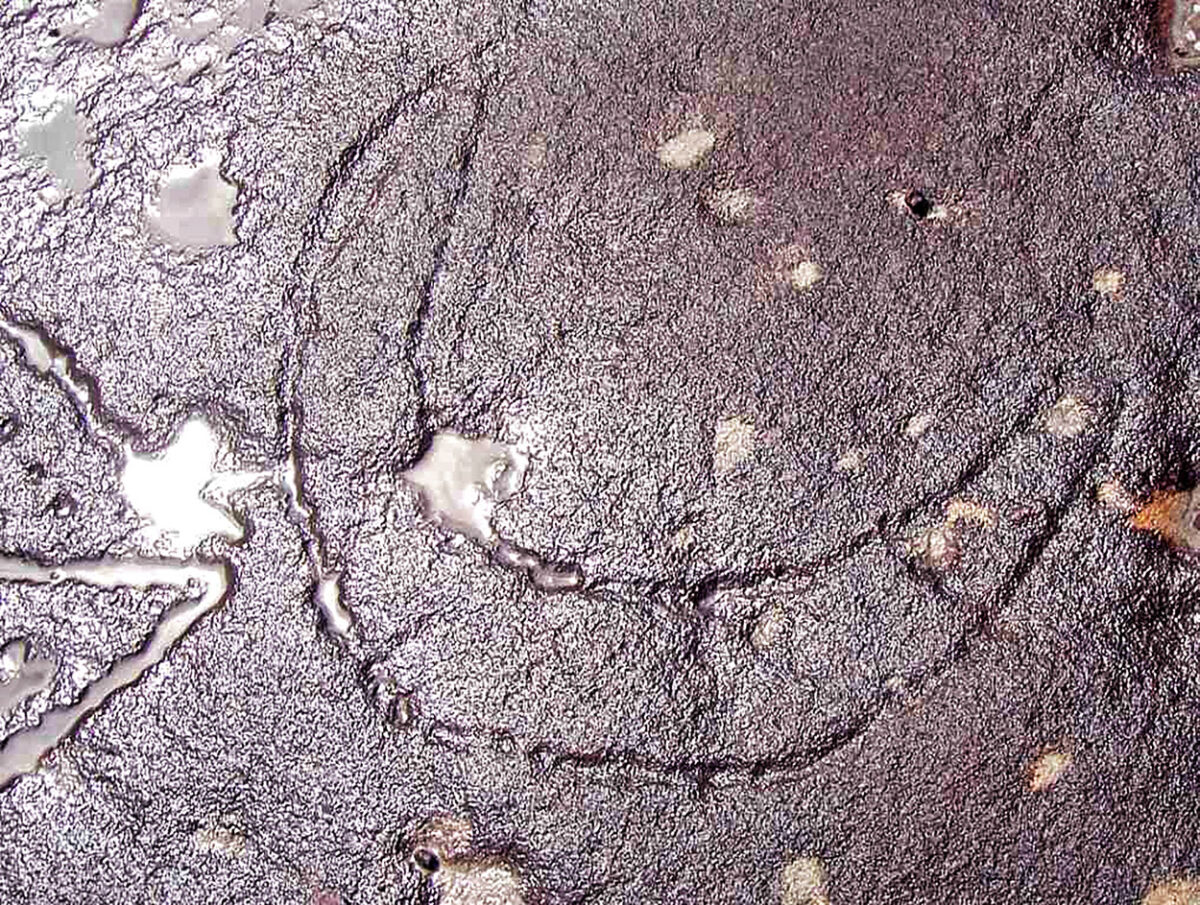
Image Source: http://upload.wikimedia.org/wikipedia/commons/c/c1/Ku-ring-gai_Chase_-_petroglyph2.jpg
Look carefully at the image of the Ku-ring-gai Chase petroglyph provided above.
What process was used to create this image in the rock?
Give your reasons for making this suggestion.
Hints:
Remember to use the “language of explanation” such as “I made this decision because I observed …. From this/these, I figured out that ….
In a more formal response, you would write in the third person, past tense so that your sentences would be similar to the answer to this question: What was the weather like when the photograph was taken? Explain. The answer would read: Several of the indentations in the rock appear to be filled with a liquid as (or because) they are reflecting more light than the surrounding rock. Therefore, it can be assumed that there had been rain recently in that area.
Activity 1.3: Web Search – Petroglyphs in your Area?
For at least 60 000 years, Indigenous Australians who were talented artists and story tellers shared their knowledge and understanding through the records they left on the rocks. Unfortunately, in many parts of Australia today, these stories, with the knowledge and understanding involved, have been lost. However, the art records on the rocks remain.
This activity has shown you an example of a petroglyph that is found in Sydney, NSW. However, there have been and still are, Aboriginal people living all parts of Australia. Perhaps there are rock engravings in your local area?
There are many websites which can help you to begin the search for these engravings, and, possibly, understand the meanings of these engravings, in the place where you live. Perhaps your teacher will help you to find local Indigenous people who can tell you about the purpose of these engravings?
This has a summary of sites for you to investigate! A brilliant collection of information – http://austhrutime.com/australian_archaeological_sites.htm
OR
Use the following words in an Internet search engine such as Google
“Petroglyph Indigenous Australian” followed by the name of Your State or town
Questions:
What evidence have you found of petroglyphs in your area?
What do these petroglyphs represent? What stories do they tell?
If you cannot answer part b, suggest some steps you could take to find an answer.
Activity 1.4: Making petroglyphs – Sandstone is a soft rock?
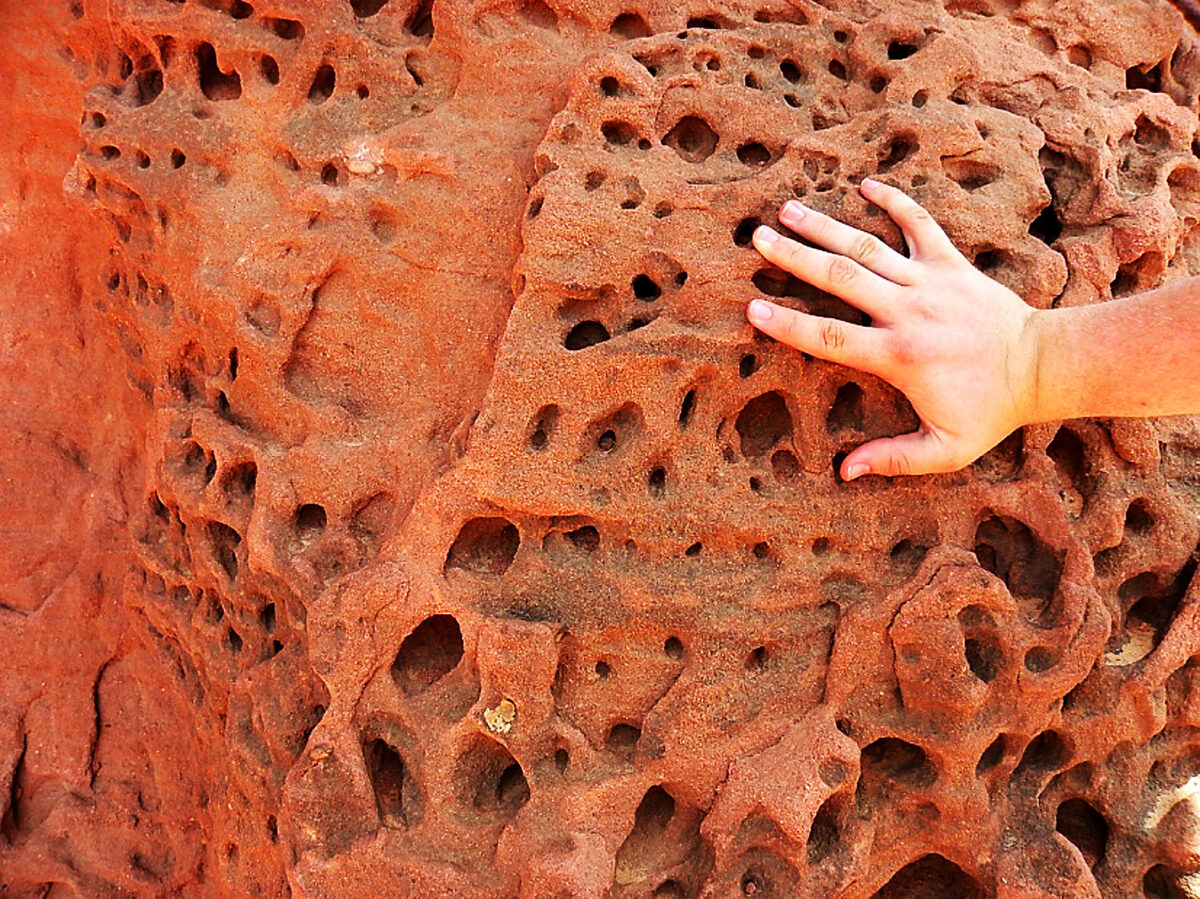
Sandstone with honeycomb weathering. The wind carrying salt grains from the ocean and sand from the beach has carved out holes in the rock.
Image Source: http://upload.wikimedia.org/wikipedia/commons/thumb/1/11/HoneycombWeatheringCambrianIsrael.jpg/1280px-HoneycombWeatheringCambrianIsrael.jpg
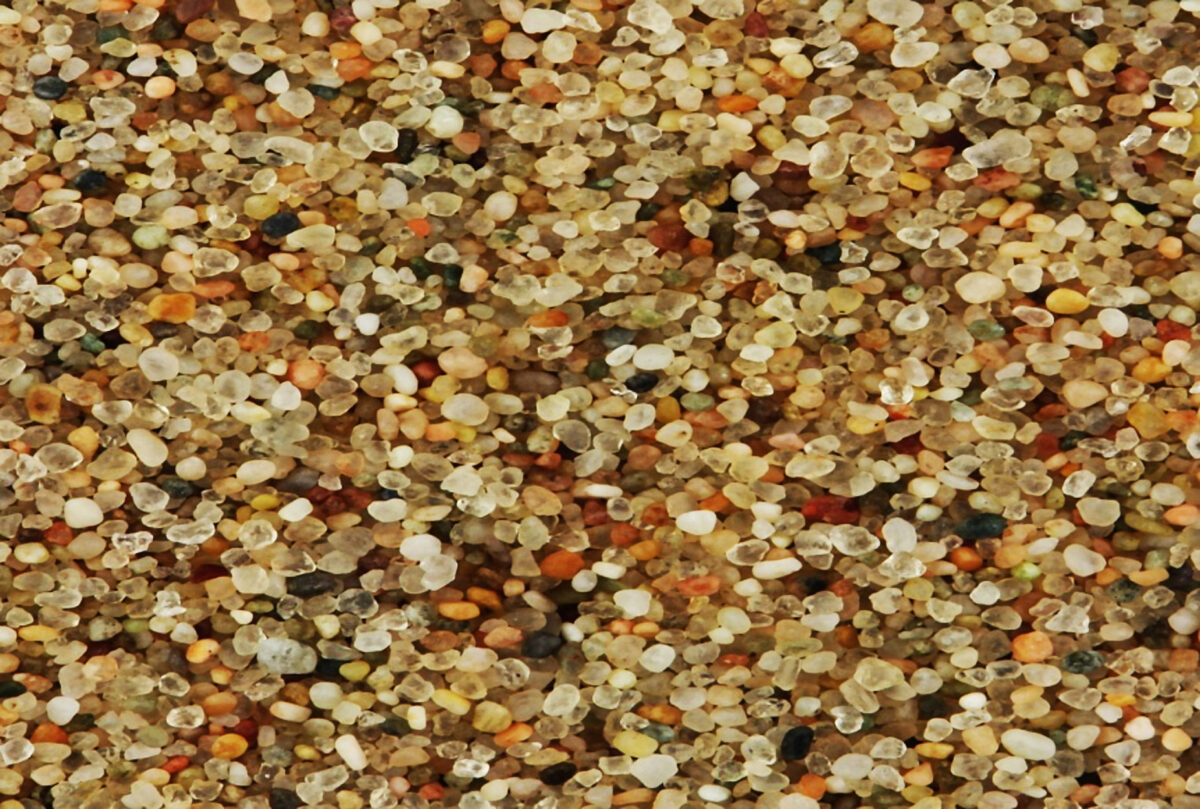
Sand grains – do they look soft? Why is it said that sandstone is a soft stone?
Image Source: http://upload.wikimedia.org/wikipedia/commons/7/7b/Sand_from_Gobi_Desert.jpg
Modelling the Engraving Process
Search and find: Can you find some sandstone around your place? Collect a variety of rocks from around your school or your home. If there is sandstone amongst them, you will identify sandstone easily. When you rub your fingers over sandstone, it has a “sandy” feel and very often, small grains of sand come away.
Design and Test: Once you have found some sandstone, test some rocks, shells, sticks or other hard materials on the sandstone to identify materials that can scratch the sandstone. What process can you use to choose the best scratching material?
Record results: Write a short account of your tests once you have identified the best material to carve the sandstone.
Follow-up discussion: You might like to include in your account a suggestion about the amount of time involved in making a lasting image in sandstone. You could do this with a sentence that includes mention of the efforts that Australian Indigenous people had to make to produce the wonderful petroglyphs found all over Australia.
Summarise each of your steps and conclusions in the space below.
Activity 1.5: Word puzzle
How many words can you find in this puzzle? List them in column 1 below and write each word’s meaning in the column opposite. Try to do this without using a dictionary.
Assessment
Download the assessment for this section.
Online assessment will be added in a future version.
Progress
Section not yet completed.