Indigenous Studies
Section 2: The Path to Reconciliation
This section attempts to chart the background and history of active discrimination against Aboriginal and Torres Strait Islander (ASTI) people. It identifies the legislation that successive State and Federal governments enacted to keep ASTI people separated and powerless. Where appropriate enacted legislation might have assisted ASTI people, it was often blatantly ignored through the agencies responsible for its policing.
“The first century and a half of European-Aboriginal relations in Australia can be characterised as a period of dispossession, physical ill-treatment, social disruption, population decline, economic exploitation, codified discrimination, and cultural devastation. The notional citizenship ascribed to the Aboriginal people at the beginning of this period was all but gone by the end of it, and as if to illustrate this point, in every State the law specifically sanctioned the removal of Aboriginal children from their parents. The aim of such removals was to separate ‘full-bloods’ from the ‘half-castes’, curb indigenous reproduction (girls being especially targeted for removal), provide a cheap source of labour and facilitate the Christianising of the indigenous population.” – From Dispossession to Reconciliation.
Over the passage of the 20th century, many began to realise the injustices being served on ASTI people and governments began to respond to pressure from determined individuals within and outside of government. The reconciliation process began. There have been many positive milestones bringing together Indigenous and non-Indigenous Australians. Australians have witnessed powerful symbolism in moments such as the national apology to the Stolen Generations, and a walk of 300,000 people across Sydney Harbour Bridge in support of reconciliation.
There is still much work to be done. One Aboriginal Elder was asked what she wanted from reconciliation. Her reply was simply, “Nothing really except that we are not judged by the colour of our skin. We want to be equal.” What does equality imply? Would this be a good discussion point for your class?
Reconciliation is not a passive process. While many might expect that governments would lead by example, reconciliation is not simply the realm of governments, not-for-profits, or Indigenous leaders. Successful reconciliation can only come from the hearts and minds of each and every one of us.
The Australian Constitution – Recognition of the Existence of Aboriginal and Torres Strait Islander People in Australia
The Australian Constitution established the Commonwealth Government (now known as the Australian Government), defined its structure, powers, and procedures, and defined the rights and obligations of the states in relation to the Commonwealth.
Sir Henry Parkes, GCMG (1815-1896) was a statesman and politician who is considered the Father of the Australian Federation.
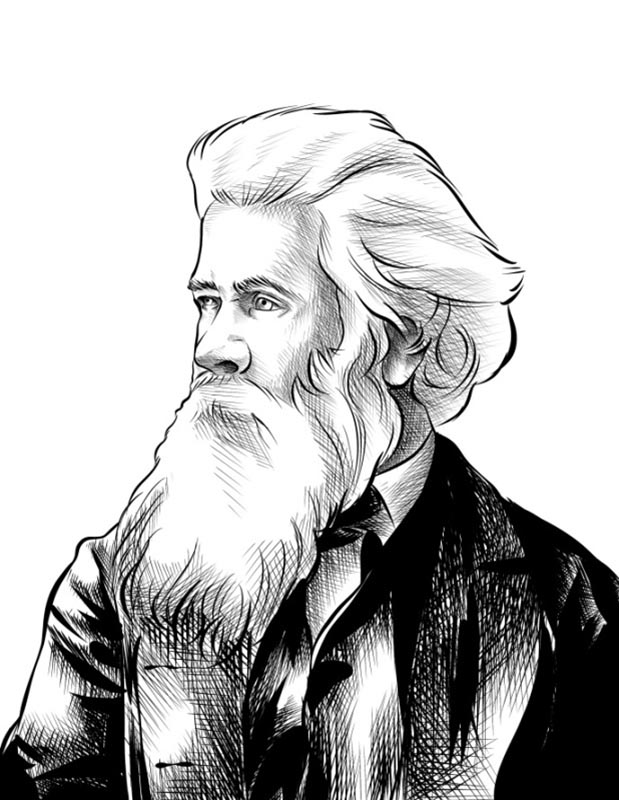
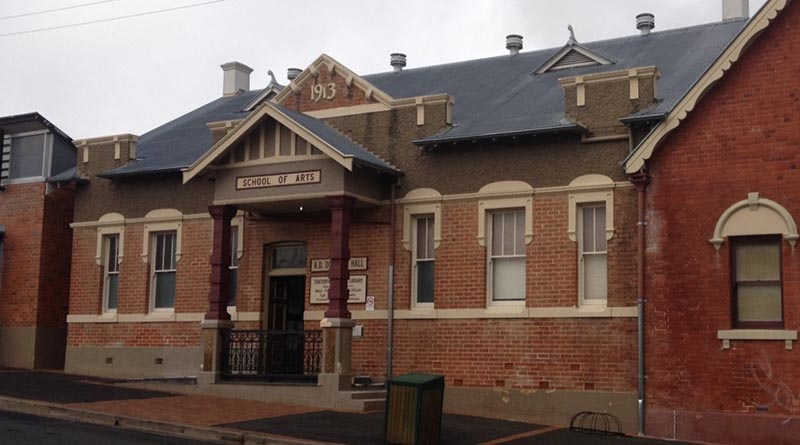
Best remembered for his fiery and impassioned support for the Federation of Australian Colonies, Sir Henry Parkes took his Federation call to the people at the Tenterfield School of Arts on 24 October 1889.
Out of the Federal Council came the Commonwealth of Australia.
Voting Rights
Voting rights for Indigenous Australians began in the mid-19th century but restrictions were not removed and rights were not finally confirmed Australia-wide until close to the end of the 20th century. Between 1856 and 1900 all Australian colonies had given Aboriginal men the right to vote. Unlike other states, South Australia passed laws in 1895 that said that all adults could vote – this included women as well as all Indigenous people. However, Queensland (1885) and Western Australia (1893) passed laws specifically to prevent Indigenous people from voting.
Commonwealth legislation was passed to regulate voting rights in 1902. The Commonwealth Franchise Act 1902 outlined who could vote in Federal elections and Section 4 of the Act stated: No Aboriginal native of Australia, Africa or the Islands of the Pacific except New Zealand shall be entitled to have his name placed on an Electoral Roll unless so entitled under section 41 of the Constitution.
Many Aboriginal and Torres Strait Islanders fought for Australia during World War I and World War II . It was argued that if Indigenous people were good enough to fight and die for their country, they were good enough to vote in its elections. In 1949, the right to vote in federal elections was extended to Indigenous Australians who had served in the armed forces or were enrolled to vote in state elections.

All Indigenous Australians were finally given the right to vote in Commonwealth elections in Australia by the Menzies government in 1962. Discrimination still existed! Unlike other Australians, Indigenous people could enrol to vote in federal elections if they wished but it was not compulsory.
It was not until 1983 that equal voting rights were finally achieved when federal parliament agreed that compulsory enrolment should apply to all Australians. Any mention of “Aboriginal natives” was removed from Commonwealth electoral legislation and all discrimination based on race finished.
A Fair Day’s Work for a Fair Day’s Pay
Throughout much of the nineteenth and twentieth centuries, many Indigenous workers either received no wages or were underpaid for years and decades of employment.
In Queensland, Jubilee Jackson worked as a stockman near Mt Garnet for 60 years from the age of ten. His pay was a small amount of pocket money at rodeo time. The rest was held in a trust account. When he died in 1967 there was only $99 in his government-controlled account.
The savings and social security benefits of many Indigenous people were paid into trust accounts, which were regularly mismanaged, often fraudulently, and were generally inaccessible to Indigenous people. These and other such acts are referred to today as the ‘stolen wages’ practices.
In the 19th century in far north Queensland, the development of the commercial pearl shell and bêche-de-mer fishing industries was dependent on cheap Aboriginal labour. The working conditions were harsh, and recruitment was callous and often amounted to kidnapping… the mate of the Margaret and Jane was in the habit of compelling recruits to dive for shell by firing at them with a revolver and had shot two Torres Strait Islanders trying to escape.
Employment conditions were ‘unspeakably squalid and dirty’ and so terribly dangerous that there were many accidents and many deaths. Until 1874, pearl shell was collected by swimming divers who would gather the shell at depths of up to fifty feet (15.2m). Boys of twelve to fourteen years of age could bring shell up from depths up to 24 feet (7.3m). Bêche-de-mer was collected in the same way and often at the same time.
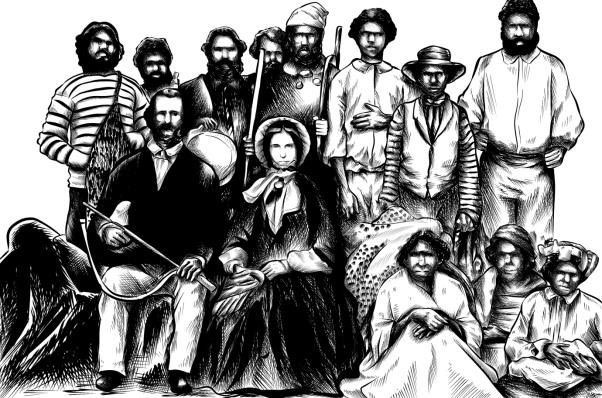
The situation on land was no better! Many Aboriginal people worked long hours in hard labour for nothing more than some poor-quality food and tobacco. As domestics, cooks, and stockmen these (Aboriginal) men and women provided the labour that created some of world’s biggest and wealthiest pastoral empires while working for little or no pay.
It was not unusual for abused Aboriginal workers to abscond or seek revenge. In 1890, a thirteen-year-old Aboriginal worker was charged with the murder of Harry Jones. It was said that Jones “worked the boy too hard and … had threatened to shoot the lad”.
Across Australia, Aboriginal station workers were valuable workers. In many instances, their wages were stolen by “protectors”, police, and other government authorities. As late as 1901, it was noted that almost all Aboriginal domestic servants, both women and children, in Queensland were not being paid for their labour. Their conditions of work amounted to slavery. There are cases of Aboriginal children employed as domestic servants being required to separate milk, dig post holes, chop the firewood, and fetch the water from the river. One Aboriginal child, ostensibly employed as a domestic servant, was charged with keeping goats warm at night by sleeping with them.
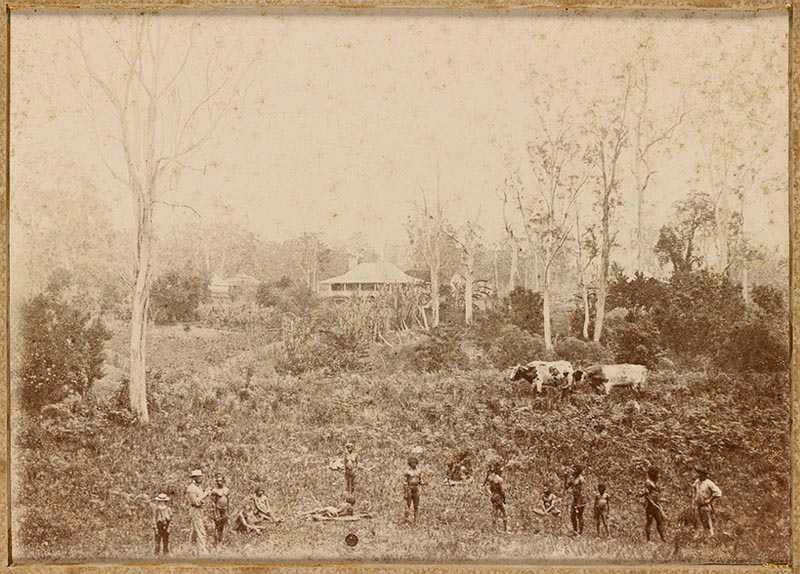
Equal wages for Aboriginal pastoral workers were phased in from December 1968 in the Kimberley region in the far north of Western Australia. When the equal wages decision was handed down, hundreds of people were forced to leave the stations they’d grown up on. Those station managers just came out and said, ‘We can’t afford to pay you the basic wage and we can’t afford to keep feeding you. The welfare mob has a lot of money for you to live in the town, so pack up your camp and start walking’. Many of the workers and their families became refugees or fringe dwellers, living in camps on the outskirts of towns and cities.
The Land Rights Struggle – The Wave Hill Walk-off
Wave Hill Station is located approximately 600 kilometres south of Darwin in the Northern Territory. In 1914, Wave Hill Station was bought by Vesteys, an English pastoral company that used Aboriginal people as extremely cheap labour. The Gurindji people, whose land it had been, lived in corrugated iron humpies without floors, lighting, sanitation, furniture, or cooking facilities. Billy Bunter Jampijinpa, who lived on Wave Hill Station at the time said,
We were treated just like dogs. We were lucky to get paid the 50 quid a month we were due, and we lived in tin humpies you had to crawl in and out on your knees. There was no running water. The food was bad – just flour, tea, sugar, and bits of beef like the head or feet of a bullock. The Vesteys mob were hard men. They didn’t care about blackfellas.
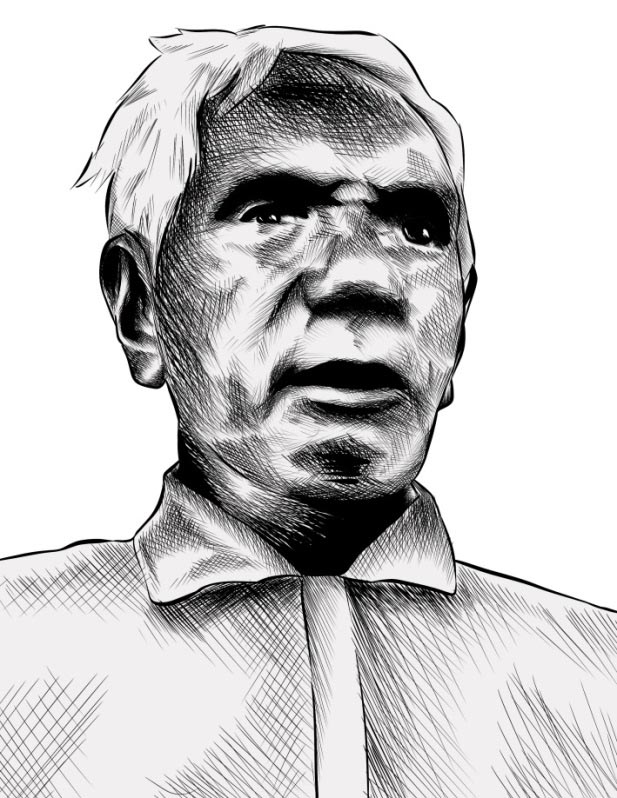
In August 1966, Vincent Lingiari, a Gurindji spokesman, led a walk-off of 200 Aboriginal stockmen, house servants, and their families from Wave Hill as a protest against the work and pay conditions. The protesters camped at Wattie Creek (Daguragu) for seven years.
The Guringji held strong to their belief in their right to the land. They wanted the return of some of their traditional lands to develop a cattle station. They petitioned the Governor-General in 1967, and leaders toured Australia to raise awareness about their cause.
In 1972, Prime Minister Whitlam announced that funds would be made available for the purchase of properties that were not on reserves. Finally in 1975, the Labor government of Gough Whitlam negotiated with Vesteys to give the Gurindji back a portion of their land. This was a landmark in the land rights movement in Australia for Indigenous Australians.
The Land Rights Struggle – The Mabo Story
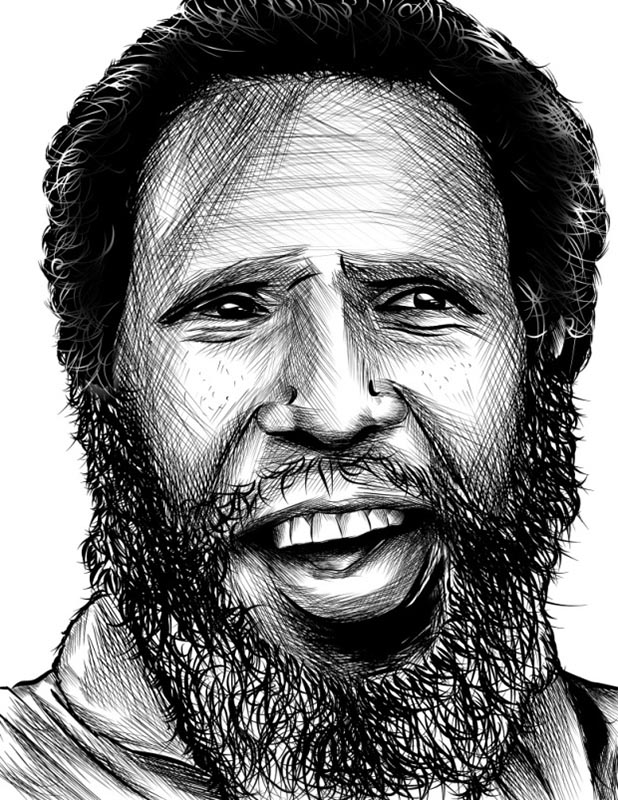
Eddie Koiki Mabo was born on Murray Island (called Mer by the traditional owners), in the Torres Strait, on June 29, 1936, as a member of the Meriam people. Eddie Mabo started to question his rights in 1969, when he tried to return to Murray Island to visit his dying father, only to be refused entry by authorities who feared he was a troublemaker. That’s when he started talking about ‘his land’.
In 1974 historian Henry Reynolds and academic Noel Loos at James Cook University explained to Eddie Mabo that his people’s traditional ownership of the island was not recognised by Australian law. They explained that the courts worked on the principal that Australia was terra nullius – “land belonging to no one” – prior to European settlement. The State of Queensland had annexed Murray and other Torres Strait islands in 1879, and according to terra nullius, owned that land.
Eddie Mabo was shocked by this discovery. He said, “Everybody knows it’s Mabo land, it’s been Mabo land for generations – no one would dream of trying to move in on it”. Professor Reynolds said the revelation “struck the spark” for Mabo’s legal battle.
In 1982, Eddie Mabo, and four others began their legal claim for ownership of their lands on the island of Mer in the Torres Strait. At the same time, Queensland’s Bjelke-Petersen Government was so concerned by the case that it passed the Torres Strait Islands Coastal Islands Act which stated “Any rights that Torres Strait Islanders had to land after the claim of sovereignty in 1879 is hereby extinguished without compensation”.
This legislation was challenged and declared invalid as it was in conflict with the Commonwealth Racial Discrimination Act 1975. Finally, 10 years after the case opened, six out of seven judges of the High Court of Australia agreed that the Meriam people did have traditional ownership of their land. The judges held that English possession had not eliminated their title and that “the Meriam people are entitled as against the whole world to possession, occupation, use and enjoyment of the lands of the Murray Islands”. Unfortunately, Eddie Mabo died just a few months before the final decision.
The Prime Minister at the time, Paul Keating, applauded the decision, saying it removed the greatest barrier to reconciliation.

“By doing away with the bizarre conceit that this continent had no owners prior to the settlement of Europeans, Mabo establishes a fundamental truth and lays the basis for justice,” Mr Keating said in his historic speech at Sydney’s Redfern Park.
“There is nothing to fear or to lose in the recognition of historical truth, or the extension of social justice, or the deepening of Australian social democracy to include Indigenous Australians.”
Recognition of Injustices to Families and Communities
Pearl Gibbs (1901-1983) was an Aboriginal activist at a time when her fellow Indigenous people were suffering under discriminatory laws and dispossession practices across Australia. She made Australian history in many ways and held many posts of political and social responsibility related to Aboriginal affairs across her lifetime.
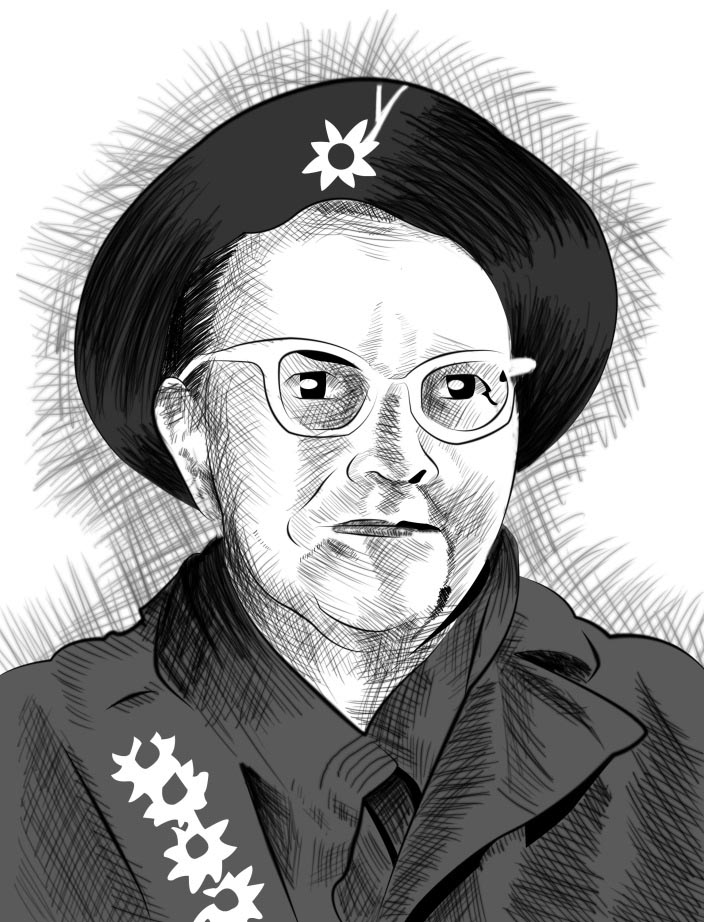
Pearl was the first Aboriginal woman to give a speech on radio in 1941. The following excerpts of her speech summarise some of the problems faced by Aboriginal and Torres Strait Islander people.
My people have had 153 years of the white man’s and the white woman’s cruelty, injustice and unchristian treatment imposed upon us… A person in whom the Aborigine blood predominates is not entitled to an old-age, invalid or returned soldier’s pension. There are about 30 full-blooded returned men in this state (NSW) whom I believe are not entitled to an old-age pension. A woman in whom the Aborigine blood predominates is not entitled to a baby bonus.
Our girls and boys are exploited ruthlessly. They are apprenticed out by the Aborigines Welfare Board at the shocking wage of a shilling (10 cents) to three and six (35 cents) per week pocket money and from two and six (25 cents) to six shillings (60 cents) per week is paid into a trust fund at the end of four years. This is done from 14 years to the age of 18 years. At the end of four years a girl would, with pocket money and money from the trust, have earned £60 ($120) and a boy £90 ($180). Many girls have great difficulty in getting their trust money. Others say they have never been paid.
Girls arrive home with white babies, I do not know of one case where the Aborigines Welfare Board has taken steps to compel the white father to support his child. The child has to grow up as an unwanted member of an apparently unwanted race. Aboriginal girls are no less human than my white sisters. The pitiful small wage encourages immorality. …. The bad housing, poor water supply, appalling sanitary conditions and the lack of right food, together with unsympathetic managers, make life not worth living for my unfortunate people.
Nancy De Vries (1932-2006), was one of the stolen generations. When Nancy was 13 months old, she was taken from Ruby, her mother, and put into State care. Her mother was told she could have Nancy back when she had a steady job. As an adult, Nancy found out that Ruby had returned, with a job, but the Child Welfare Department had refused her access to Nancy.
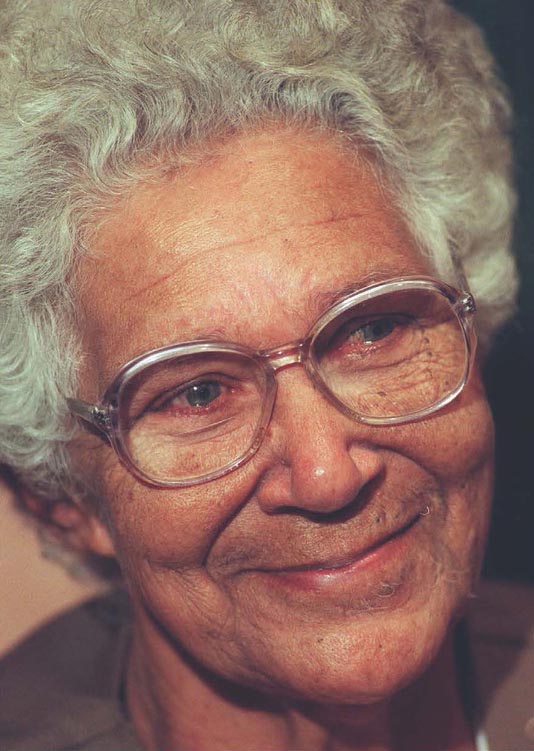
Nancy stayed in her first foster family for five years; the longest period she would remain in one place until after she turned 18 and was no longer under the control of the Child Welfare Department. She lived in eight different fosters homes, as well as in different church and government institutions including the Bidura Children’s Home in Glebe, NSW.
Her treatment was abysmal. For example, after reporting to a foster mother that she had been raped at about nine years of age, the mother returned her the next day, on the grounds that she was ‘uncontrollable’. When she did not conform to the expectations of white foster parents, she was sent to homes for ‘punishment’ even though it was result of further sexual interference. There was no protection for young Aboriginal girls! She was eventually transferred to the Parramatta Girls home, which Nancy remembered as “the finishing school because it finished us RIGHT off”.
Nancy rose above all this racially discriminatory treatment. In spite of limited career opportunities for Aboriginal women, in spite of being labelled as “low intelligence”, in spite of being given no support for her desire to train, Nancy established a career in nursing. At the age of 53, she enrolled at university and became one of the first Aboriginal women to get her nursing degree at the University of Western Sydney. In further studies, Nancy proved just how wrong her early labels were with her high distinction academic record.
Between 1997 and 2001, each Australian State and Territory government apologised in Parliament to the Stolen Generations .
The NSW Parliament, led by Premier Bob Carr, was one of the first Australian governments to offer a heartfelt and unanimous apology to Australia’s Indigenous communities in 1997 as a result of the Australian Human Rights commission Bringing Them Home report.

Part of Premier Carr’s apology said:
We are confronted with continuing, contemporary pain, grief and loss as has been demonstrated in this House this morning. We cannot ignore the overwhelming evidence … that for a century this Parliament supported laws, which inflicted, and continue to inflict, grief, suffering and humiliation – laws designed, in the word of the Link-Up statement ‘to eliminate us as Aboriginals’ … I reaffirm in this place, formally and solemnly as Premier on behalf of the government and people of New South Wales, our apology to the Aboriginal people.
Nancy de Vries, the only woman, except for the Queen, to do so, was invited to address the assembled NSW Parliament. Later she recalled that this was the most important day of her whole life – for herself, her mother, and all Aboriginal people. In 2001 she said,
They can’t give me back my mother, my lost childhood, the feeling that I was loved. No amount of money could give me back that and I don’t want it. But when Bob Carr gave his apology, it was a removal of all my mother’s guilt. The secret she bore alone. It was so important to me as her daughter that her hurt be removed. The apology set her free.
In 1998, a National Sorry Day was instituted, to acknowledge the wrong that had been done to Indigenous families. Many politicians, from both sides of the house, participated, with the notable exception of the Prime Minister, John Howard. It took 8 more years and a change of government for a formal apology to come at national level.

In 2008, Prime Minister Kevin Rudd made a formal apology to the Aboriginal people. One section of his speech follows:
Nanna Nungala Fejo, as she prefers to be called, was born in the late 1920s. She remembers her earliest childhood days living with her family and her community in a bush camp just outside Tennant Creek. She remembers the love and the warmth and the kinship of those days long ago, including traditional dancing around the campfire at night. She loved the dancing. She remembers once getting into strife when, as a four-year-old girl, she insisted on dancing with the male tribal elders rather than just sitting and watching the men, as the girls were supposed to do.
But then, sometime around 1932, when she was about four, she remembers the coming of the welfare men. Her family had feared that day and had dug holes in the creek bank where the children could run and hide. What they had not expected was that the white welfare men did not come alone. They brought a truck, two white men and an Aboriginal stockman on horseback cracking his stockwhip. The kids were found; they ran for their mothers, screaming, but they could not get away. They were herded and piled onto the back of the truck. Tears flowing, her mum tried clinging to the sides of the truck as her children were taken away to the Bungalow in Alice, all in the name of protection.
A few years later, government policy changed. Now the children would be handed over to the missions to be cared for by the churches. But which church would care for them? The kids were simply told to line up in three lines. Nanna Fejo and her sisters stood in the middle line, her older brother and cousin on her left. Those on the left were told that they had become Catholics, those in the middle Methodists and those on the right Church of England. That is how the complex questions of post-reformation theology were resolved in the Australian outback in the 1930s. It was as crude as that. She and her sister were sent to a Methodist mission on Goulburn Island and then Croker Island. Her Catholic brother was sent to work at a cattle station and her cousin to a Catholic mission.
Nanna Fejo’s family had been broken up for a second time. She stayed at the mission until after the war, when she was allowed to leave for a prearranged job as a domestic in Darwin. She was 16. Nanna Fejo never saw her mum again. After she left the mission, her brother let her know that her mum had died years before, a broken woman fretting for the children that had literally been ripped away from her.
Reconciliation Case Study 1: Bob Randall
Teacher Notes
The story of Bob Randall is a positive affirmation of the strength and endurance of one person’s commitment to his ancestry and his ancient culture. Bob Randall is one of the stolen generation and his story covers:
Aboriginal beliefs about their origins,
his childhood with his mother and extended family,
his removal from his family and his incarceration in homes for “half-caste” children,
Aboriginal philosophy, his life as an elder and his wisdom in assisting reconciliation.
Consequently, there are several contexts in which Bob Randall’s story can be told. The case study identifies these different contexts and provides opportunities for teachers to select part or all of the activities.
Each task requires use of a reasonably small video file or an audio file off the Internet. There are two options for your use in the classroom.
For independent learners: each group of students has direct access to the Internet and watches/listens to the file as a group.
For teacher directed lessons: download the file(s) for class use to a computer attached to appropriate AV technology prior to the lesson.
Some tasks also require students to supplement their listening with some reading. In each case, the reading required is less than one page and could also be provided directly to students as printed material if necessary.
Bob Randall
Uncle Bob Randall was born at Angus Downs station in 1934 to a Pitjantjatjara mother. His father was the white station owner, Bill Liddle.
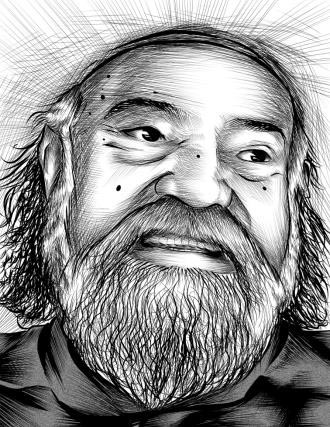
Under the Northern Territory Aboriginals Ordinance, Uncle Bob was defined as a ‘half-caste’ – he didn’t belong to his mother, or his father. The Protector of Aborigines had legal guardianship over him, and all Aboriginal children, from the moment of their birth.
He was one of thousands of Aboriginal children who were placed in institutions throughout Australia and were part of the Stolen Generation.
At about age 7, Uncle Bob was taken away from his mother and family under government policy that took all half-caste (half-Aboriginal) children away from their families. Like so many, he grew up alone, away from his family, and never saw his mother again.
Uncle Bob was taken to a receiving home for Indigenous children in Alice Springs, NT, then later was moved to Croker Island Reservation in Arnhem Land where he, like the other children, was given a new identity and birth date.
Uncle Bob is a Tjilpi (special teaching uncle) of the Yankunytjatjara Nation and one of the listed traditional keepers of Uluru. Throughout his life, Uncle Bob has worked as a teacher and leader for Aboriginal land rights, education, community development, and cultural awareness. His lifelong efforts to re-establish Aboriginal rights and culture were recognised in 1999 when he was named Indigenous Person of the Year at the National Aboriginal & Islander Day.
Listen to Uncle Bob’s story in this audio from ABC Radio National’s Hindsight program.
Watch this video of Bob Randall singing My Brown Skin Baby. This song became the unofficial anthem of the Stolen Generation.
Read this transcript where Uncle Bob discusses his childhood.
Reconciliation Case Study 2: The Martu People
Teacher Notes
The case study on the Martu of Western Australia spans a broad spectrum of ideas and information. It will provide students with a concise snapshot of the country of the Martu, their interactions with the colonialists and their current status. It is envisioned that such a case study may serve as a model for students to delve into the history of Indigenous people from their local community. This case study also provides evidence of the importance of land rights claims to people who, in the past, were removed from their lands.
The main reference used for this case study is the PhD thesis of Dr Fiona Walsh which is available in its full 476 pages at https://www.nintione.com.au/resource/To-hunt-and-to-hold_Martu-Aboriginal-peoples-uses-and-knowledge-of-their-country.pdf.
The rational for compiling this case study can be found in Dr Walsh’s thesis in section 1.3.1.
“Lucy Purungu Gibbs intercepted me. She was a formidable Martu woman of strong presence and intellect; the wife of a recent chairman of the Martu regional representative body—Western Desert Land Council (WDLC). She raised a significant issue about my work. In paraphrase ‘[the research risked] dragging us backwards … we are not pujiman (bushmen) anymore … we still eat mayi (food plants) and kuka (bush meat) but not that pujiman way. We have a car, we have a house, we go hunting.’ Her message was that I must consider the present day life of Martu” .
The tasks associated with this case study are multi-disciplinary and may be selected according to the context in which this case study is used in the classroom environment.
The Martu People – Past and Present
The Martu are Australian Aboriginal people of the Western Desert of Western Australia. The definition of ‘Martu’ means ‘Aborigine, a person; people; a man’. There are several Martu language groups and the majority of Martu are now bilingual with English as their second language.
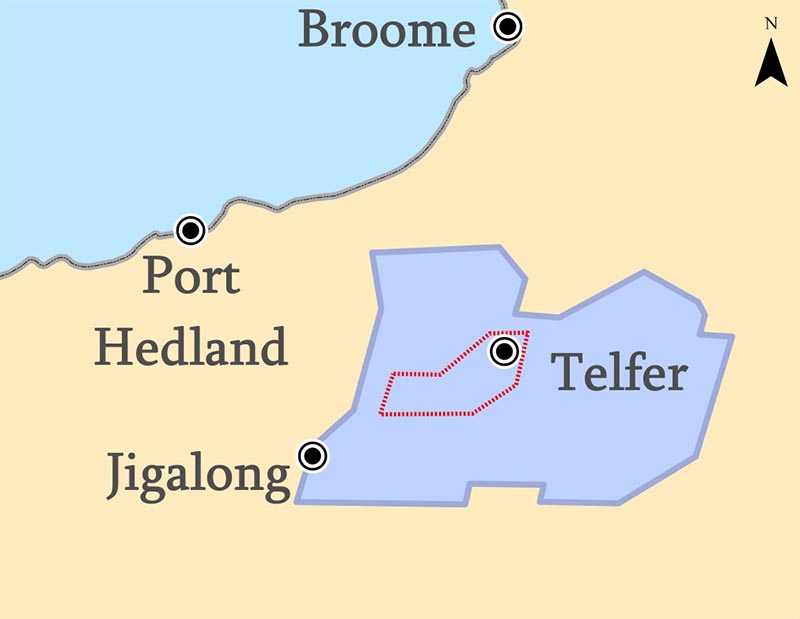
Martu Country
Martu lands include the Percival Lakes and Pilbara regions in Western Australia. Their lands lay across part of the Pilbara deserts including the Little Sandy Desert and western Great Sandy Desert regions.
Water in the Desert
Water in the desert often comes from palaeodrainage systems such as the ancient river systems that occur in the Percival Lakes region. This ancient system comes to the surface at Lake Tobin and Lake Auld. Such networks are present over much of arid Australia and although the ancient filled-in valleys (palaeovalleys) and their rivers (palaeorivers) can no longer be seen on the surface of the land, they are constantly changing groundwater systems.
The most characteristic visible feature of the inland palaeodrainage networks is playas or salt lakes, which are a dominant feature of Western Australia’s arid zones. Large areas of land go through a cycle of being wet for part of the year and then changing to a salt crust or dusty area of flat dried up land as they dry out.
Investigating Martu Country Today
In common with Aboriginal and Torres Strait Islander people in other parts of Australia, the Martu have strict laws in relation to the care of family members, kinship and skin obligations as well as traditionally influenced protocols to provide, request and distribute goods.
The Martu people were and still are typical examples of the great value that Aboriginal people place on belonging to a group and meeting the obligations and responsibilities to others in their community. Martu society is a generous one. Prestige is gained by giving away what you have. For example, a hunter who is able to give away a large quantity of meat to others gains prestige.
Each day, at least one group of Martu still hunts on traditional lands. Although traditional Martu law does not dictate it, men and women generally choose different prey to hunt. Women hunt the small parnajarlpa (sand goanna) which they are more likely to find in big enough numbers to feed their own family. A successful goanna hunter then decides how to distribute her catch.
The men hunt for animals such as the kirti-kirti (euro, or western wallaroo) or the kipara (Australian Bustard). A successful euro hunter places the carcass at the edge of camp and takes no further role in the butchering or distribution.
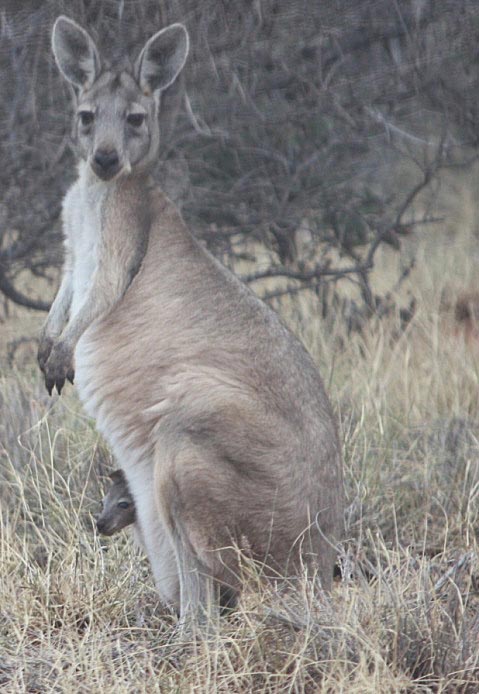
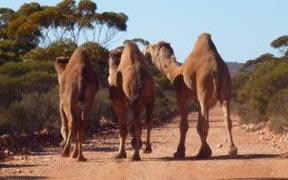
Since early European settlement in the late 1800s, the Martu have hunted feral animals such as cats. Now, they also use modern tools – four-wheel drive vehicles (4WDs) and guns – to hunt feral camels that have affected kangaroo numbers because of increased competition for water.
Martu ranger groups, working with environmental scientists, are also using GPS equipment to map sightings of both native and introduced species of fauna.
Martu plant knowledge is also being revitalised by Martu rangers and the wider community in part through the use of iPads, on-country trips and plant collecting exercises as well as the important, traditional interaction between grandparents teaching their grandchildren about country.
Impact of the English on Aboriginal Health
When the explorers and settlers came in the late 1800s and onwards, they brought with them not only strange animals such as horses and cattle but also European diseases. The European population were survivors as well as possibly carriers of diseases from their disease-rich homelands and had a strong resistance to diseases such as bronchitis, measles, scarlet fever, chicken pox and even the common cold. These common diseases were often fatal to Aboriginal people as they had no resistance to them.
Europeans also brought with them other terrible diseases such as smallpox, tuberculosis and venereal disease that were deadly for both European and Aboriginal people.

Having no genetic immunity to these new diseases, the Martu population was greatly affected by waves of disease epidemics. The tragic effects of illness are recounted in Martu oral histories of that time – they tell of sickness, the deaths of young and old people and looking for absent kin.
Changes to diet also became a source of ill health and disease in Aboriginal people. Often these changes were caused by little or no access to traditional food as people were forced off their lands. These changes either led to starvation or to being forced to have a European style diet with refined sugar, flour and offal. The impact of a diet based on these introduced foods was made worse because the rations provided consisted of the worst quality and cheapest grains and meats available.
The Canning Stock Route
Martu traditional lands cover the central part of the Canning Stock Route (CSR) which was proposed as a way of breaking a monopoly that west Kimberley cattlemen had on the beef trade at the beginning of the 20th century.
In 1896, David Carnegie led expeditions during which his team endured many hardships including loss of camels to poisonous plants. At one point, after nearly a fortnight without finding water, Carnegie began to capture Aboriginal people and deprive them of water or feed them salt beef to force them to reveal secret water supplies. He wrote “What heart breaking country, monotonous, lifeless, without interest, without excitement save when the stern necessity of finding water forced us to seek out the natives in their primitive camps”. Carnegie concluded that the route was “too barren and destitute of vegetation” and was impractical.
However, in 1906, the Government of Western Australia appointed Alfred Canning to survey the route through Martu country. “Canning’s party set out from Perth in April 1906 to locate well sites roughly a day’s walk apart and with enough water for up to 800 head of cattle.”
“We had with us twenty-three camels, two ponies, eight pairs of water drums with a capacity of 320 gallons … and sufficient food supplies to last nine months, with the exception of tinned meats, a sufficient supply of which it is almost impossible to carry, owing to its bulk and weight, consequently we depended to a certain extent on what game we could get.”
“He also brought along police-issue neck-chains — for the Aboriginal guides who would lead him to water.”
Some local Aboriginal people volunteered their assistance to Canning’s team to help them locate waterholes. However, Canning also captured a number of Martu men, fed them salt beef or salt water, and then chained them up at night. His objective was to find sources of water along the route. He waited until the heat of the day, when they were thirsty and they would then lead Canning’s party to water sources.
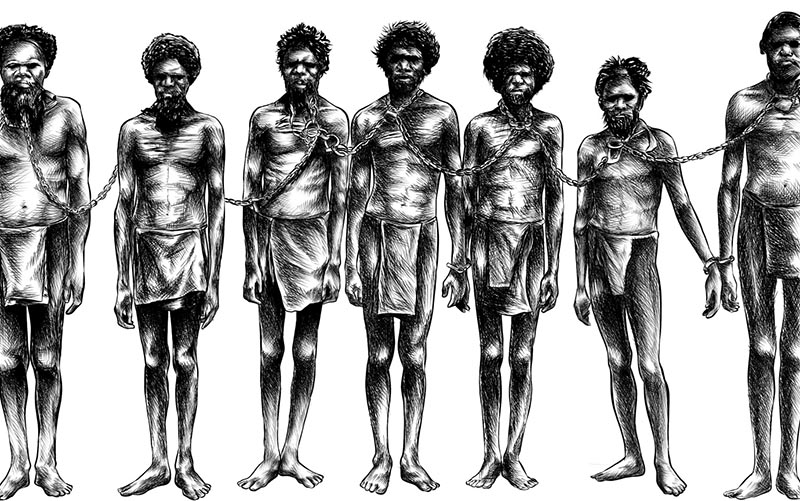
Canning’s attitude towards Aboriginal people – approving of abuse, enslavement, and dispossession – was a cruel reflection of his time. The expedition’s cook, Edward Blake, objected to the use of chains and criticised the “party’s ‘immoral’ pursuit of Aboriginal women, the theft and ‘unfair’ trade of Aboriginal property and the destruction of native waters”.
When the survey party returned to Perth, Canning’s treatment of Aboriginal guides lead to a Royal Commission. During the Commission, abduction and chaining were accepted as ‘reasonable’ and Canning and other men in the party were exonerated of other charges, including raping Aboriginal women and stealing property. Indeed, the first Premier of Western Australia, John Forrest, dismissed Canning’s actions by claiming that all explorers behaved in this manner.
Canning and his crew converted surface waters into permanent wells. This action caused significant water removal not only from the local area but from close-by surface waters fed by connected underground springs.
Blake had voiced his concern that the planned wells would prevent Aboriginal people accessing water. Nevertheless, 37 wells were built on or near existing Aboriginal waters and were constructed in the European tradition, which made many of them inaccessible to Aboriginal people.
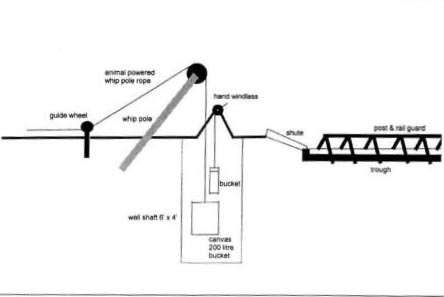
The water was winched up in buckets that could hold up to 200 litres. These buckets of water were so heavy that it would take 3 men or the strength of a camel to haul the water up from the depths of the well and tip it into the sluice for their animals to drink.
Because their traditional water resources disappeared when these wells were constructed, Aboriginal people had to get their water from these wells. As a result, many were injured or died while trying to access the water, by either falling in and drowning or breaking bones on the windlass handle.
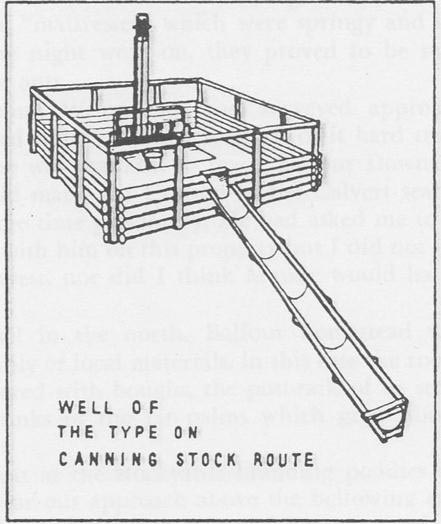
Needless to say, hostilities followed and Aboriginal people sabotaged the wells. The first drovers to take cattle down the Canning Stock Route were killed by spearing. These tragedies are magnified by the fact that, from 1911 to 1931, drovers brought only 8 herds of cattle down the Canning Stock Route.
In 1930, William Snell rebuilt the wells, fitting some with ladders for easier access, but he ran out of materials before the reconditioning was completed.
After improvements, it would only be used around 20 times between 1931 and 1959 when the last droving run was completed.
Nowadays, the Canning Stock Route has become a popular tourist route for those with 4-wheel drive (4WD) vehicles. In addition, the Martu and other Aboriginal groups are now telling their stories of the Canning Stock Route through paintings and oral histories.
“We wanna tell you fellas ‘bout things been happening in the past that hasn’t been recorded, what old people had in their head. No pencil and paper. The white man history has been told and it’s today in the book. But our history is not there properly. We’ve got to tell ‘em through our paintings.” – Clifford Brooks, Wiluna, 2007.
David Carnegie wrote, “What heart breaking country, monotonous, lifeless, without interest,” yet this is the country that the Martu have lived in for at least 25,000 years. Some of the country is pictured below and shows some Australian Bustards in their natural habitat.
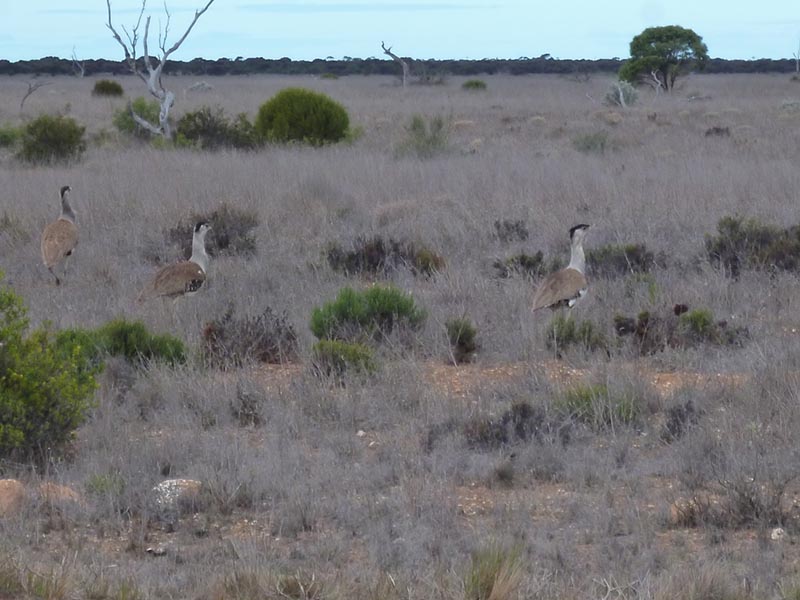
The Canning Stock Route history has been part of Australian colonial history for over a hundred years. From a white colonial perspective, it is a story of bravery in some of the harshest conditions in the world, it is a story of bravery against attacks from “the natives” and it is a story of survival against the odds.
For Aboriginal people, the Canning Stock Route also has a history, and they are keen to have their story told. From an Aboriginal perspective, it is a story of cooperation, misunderstandings, violence, and tragedies. It is also a much older story of connection with country.
Reconciliation is about unity and respect between Aboriginal and Torres Strait Islanders and non-Indigenous Australians. Retelling the story of the Canning Stock Route from an Aboriginal perspective as well as a white colonial perspective gives a more balanced view of the Canning Stock Route’s history.
Dispossession and Stolen Children
Martu recounts of contact with the English and other Europeans include stories of damage to essential drinking waters, theft of women and violation of sacred sites by “whitefellas”. The Martu suffered under the strength of European weaponry and there were killings, reprisals, chaining, and imprisonment of Western Desert people.
In Western Australia, the Aborigines Act 1905 removed the legal guardianship of Aboriginal parents and made their children all legal wards of the state, so no parental permission was required to take children from their parents. The WA government then began “bringing in” Aboriginals to missions and resettlements such as that at Jigalong and later forcibly removing children, particularly “mixed blood” children, from their families in an attempt to anglicise them.
The mission at Jigalong imposed strict Christian principles on its residents with school and church attendance compulsory. Dormitories separated boys from girls and parents and grandparents were separated from children. Only English was to be spoken and the use of Martu languages was forbidden. The mission also provided food, water, shelter, and medical services to the many Martu who suffered a rapid deterioration in health in the settlements. As late as the 1950s and 60s, Indigenous children were still being removed from their families, placed in mission facilities, and discouraged from sharing traditional cultural information, practices, and beliefs.
The communities in the Western Desert resisted the fragmentation and displacement that began with white settlement. This finally resulted in the Pilbara Aboriginal Workers Strike, which began in 1946 when people walked off pastoral stations across the Pilbara, protesting against the conditions and treatment they were forced to endure in the pastoral industry. Many workers were not paid at all, but compensated in rations of tea, flour, sugar, and tobacco.
Government policies enforced by station owners and police meant that the workers were not free to leave their employment or move around the Pilbara. The strike saw about 800 people leave the stations between 1946 and 1949. Not all of the Martu People were involved in the strike, and some were forced to return to their work, but others sought new occupations and gained their independence.
In 1964 Patrol officer Walter MacDougall was sent to the Percival Lakes region to clear the area of a group of Martu people still living traditionally off the land that was in the line of fire and dump zone of the Blue Streak rocket tests. The patrol officers took the group to Jigalong where the missionaries gave them clothes and food and money. The last Martu people to leave the desert were Warri and Yatungka in 1974. Their story features in the book The Last of the Nomads by W.J. Peasley.
In less than 50 years, Martu families had shifted from a fully hunter-gatherer life to a life in settlements. Can you imagine the dramatic differences in the lifestyles and experiences of grandparents and their grandchildren?
Return to Country – the Land Rights Struggle
From the late 1970s, Martu groups progressively returned to their custodial lands and settled at various points forming outstations where they lived and from where they hunted. However, other people had also moved into or claimed Martu lands for purposes as diverse as pastoral leases, mineral exploration and mining, tourism, and the gazetting of a National Park as well as the surveyors who opened up the area with roads.
While the Martu believed that they were returning to lands of which they were the rightful custodians, under white Australian law, they were crown lands or national parks. There were also many mining exploration licences issued for much of this land. From 1976, when a conservation reserve was proposed near culturally significant Durba Hills, the Martu fought for title to their country.
The claim covered 220,000 square kilometres of land in the Pilbara region, most of which was unallocated Crown land. This claim was successfully negotiated over the next six years. All parties agreed to recognise the Martu’s native title rights over 130,000 square kilometres, while the Ngurrara people were acknowledged as owning 5,652 square kilometres around the Percival Lakes. The Western Desert Lands Aboriginal Corporation (Jam Ukurnu Yapalikunu) now administers land on behalf of the Martu people. Their ownership over the land was formally recognised by the Federal court in the Martu and Ngurrara determination of 2002.
Since then, meaningful partnerships have been negotiated by the Martu such as that with a mining company, Newmont. This partnership has enabled the development of fee-for-service contracting by Martu rangers on Newmont’s Jundee mine, as well as the development of co-ordinated land management planning and activities between Martu, local pastoralists and Newmont’s environment team on the broader Jundee and Lake Violet leases.
In April 2013, a declaration ceremony for the Birriliburu Indigenous Protected Area of 6.6 million hectares of land took place at Milyinirri (Well 6 on the Canning Stock Route). The Martu people will now receive federal funding to manage the land. A plan has been set in place for the way that the Birriliburu native title holders will look after their country.
The Martu had more to celebrate in July 2013. After a 15-year process, the Federal Court formally acknowledged another native title area, spanning almost 50,000 square kilometres in and around Wiluna, 950 kilometres north-east of Perth. This means that the Martu have a bigger voice and a bigger say in what is going to happen to their country.
Martu people do not live as bush people anymore. They still eat mayi (food plants) and kuka (bush meat), but they have cars, and houses. They do go hunting and they do have jobs. You can find out more about modern Martu from the following resources:
Descriptions of the Martu people hunting today from Stanford Magazine.
Indigenous perspectives on biodiversity from CSIRO.
Information about Martu involvement in mining.
Jamukurnu-Yapalikurnu Aboriginal Corporation (Grandfathers country-Grandmothers country) is the trustee for Martu exclusive native title lands and rights.
A description of the Martu ranger program.
Assessment
Download the assessment for this section.
Online assessment will be added in a future version.
Progress
Section not yet completed.